
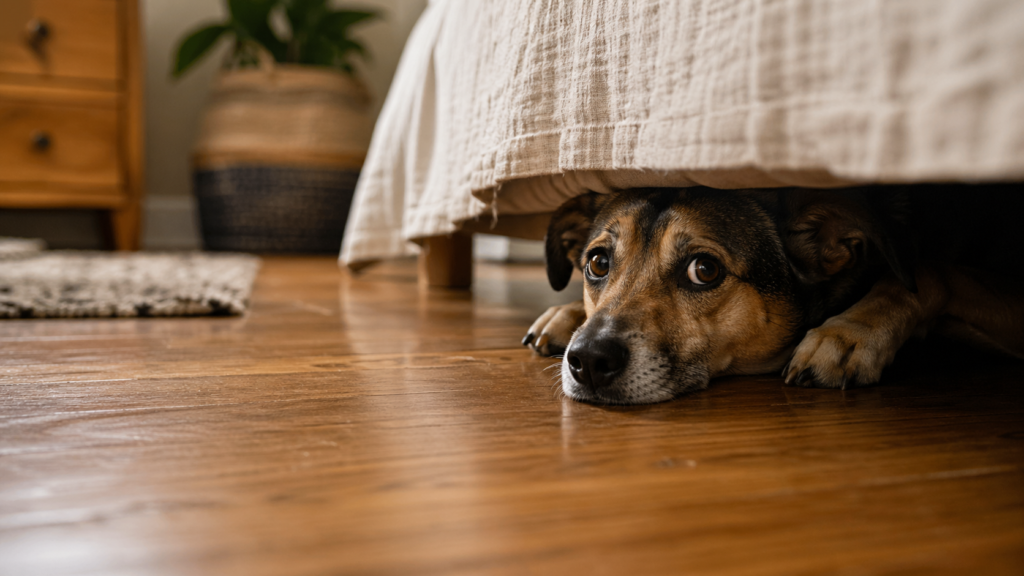
You’ve brought your rescue dog home. You expected maybe a little nervousness — not a dog who hasn’t moved from behind the sofa in two days. Or maybe the opposite: a dog who’s been glued to your side since the moment you walked through the door, already howling when you go to the bathroom.
Rescue dog anxiety is incredibly common. Almost every dog coming out of a shelter or foster home goes through some form of it. The good news is that most of it is temporary — and understanding what’s happening makes a real difference in how you respond to it.
The 3-3-3 Rule — and Why It’s So Useful
If you’ve spent any time in rescue communities, you’ve probably heard of the 3-3-3 rule. It’s a rough guide to the three phases most rescue dogs go through when adjusting to a new home:
- First 3 days — survival mode. Your dog is overwhelmed. They may not eat, may hide, may seem shut down or conversely, overly clingy. They’re not showing you their real personality yet — they’re just trying to feel safe.
- First 3 weeks — learning the routine. They’re starting to understand that this place has a pattern — meals happen at a certain time, walks happen, you leave and you come back. Anxiety often starts to ease here.
- First 3 months — showing their real self. This is when the dog you actually adopted starts to emerge. Most of the adjustment anxiety has settled, and their true temperament comes through.
The 3-3-3 rule isn’t gospel — some dogs settle in a week, others take six months. But it’s a genuinely useful frame for not panicking in the early days.
What Rescue Dog Anxiety Actually Looks Like
Anxiety in newly adopted dogs shows up differently depending on the dog’s history and temperament. Here are the most common patterns:
The shutdown dog
Hides, barely moves, won’t eat, flinches at sounds or touch. This looks alarming but is a normal stress response in a dog who feels unsafe. Give them space, keep things quiet, and don’t force interaction. Most shutdown dogs gradually come out as they realize nothing bad is happening.
The velcro dog
Follows you from room to room, can’t settle when you sit down, panics at any sign you might be leaving. This one needs gentle management early — if you immediately let the dog sleep on your lap 24/7, you’re building a dependency that will make alone time very hard later.
The reactive dog
Barks at everything, lunges on leash, startles easily, may snap if approached suddenly. Often has a trauma history. Needs slow, positive introductions to triggers and, usually, a professional trainer’s input.
A dog showing aggression
growling, snapping, biting — in the first few weeks is usually not “a bad dog.” It’s a scared dog whose warning signals may have been ignored before. Get professional help early rather than trying to power through it.
What Actually Helps (and What Doesn’t)
What helps:
- Routine above everything else. Same feeding time, same walk time, same schedule. Predictability is the single most calming thing you can offer a dog who has lived with uncertainty
- Letting them come to you. Sit on the floor, let them sniff, don’t reach out to pet until they’re comfortable. Forced interaction increases anxiety.
- Short, calm departures from day one. Even if you’re not going anywhere, practice leaving the house for two minutes and coming back. It teaches them early that departure doesn’t mean abandonment.
- A safe space that’s theirs. A crate, a corner with their bed, somewhere they can go and not be disturbed. Don’t force them out of it when they retreat there.
What doesn’t help:
- Flooding them with new experiences. The first two weeks should be quiet and low-stimulus.
- Too much reassurance for anxious behavior. Calm and matter-of-fact is kinder than anxious over-comfort.
- Punishment for fear behaviors. A dog who’s growling is communicating. Punishing that doesn’t fix the fear — it just removes the warning signal.
The two-week shutdown:
Some rescue experts recommend limiting outings, visitors, and new experiences for the first two weeks to give the dog time to decompress. It’s not about isolation; it’s about giving them a quiet base from which to slowly expand their world.
If Separation Anxiety Develops
Not all rescue dogs develop separation anxiety, but it’s more common in dogs from shelters — particularly those who were surrendered by a previous owner, and those who bonded very quickly with you in the first weeks.
The signs are specific: distress when you leave, not just boredom. Sustained barking or howling, destruction near exits, house soiling in a previously clean dog. If you see these patterns appearing, start working on them early — graduated departure training is much easier to do preventatively than to fix once it’s established.
For the full picture on this, read our complete guide to dog separation anxiety.
Products Worth Considering
No product will substitute for routine and patience, but a few things can take the edge off during the adjustment period:
Releases synthetic dog-appeasing pheromone — mimics the calming signal produced by nursing mothers. Plug it in near your dog’s sleeping area. Not a miracle solution, but genuinely helpful for many dogs in the early settling-in period.
L-theanine-based supplement. Good for taking the baseline anxiety down a notch during the first few weeks, especially before anticipated stressors like the first vet visit or first car ride.
Common Questions
How long does rescue dog anxiety last?
Most adjustment anxiety improves significantly within 1–3 months. The 3-3-3 rule is a useful guide: the first 3 days are hardest, things improve meaningfully by 3 weeks, and by 3 months most dogs have found their feet. Dogs with trauma histories may take longer and may benefit from professional support.
Is it normal for a rescue dog to hide and not eat?
Yes, completely. Hiding and refusing food in the first few days is a normal stress response. Give them space and keep things quiet. If a dog hasn’t eaten after 48–72 hours, or you’re seeing signs of illness, contact your vet.
My rescue dog is scared of everything. Will they always be like this?
Probably not. A dog who appears scared of everything in the first weeks is often in an acute stress response. As they settle and learn that their new home is safe, many of these fear responses diminish significantly. Genuine fearfulness that persists beyond a few months is worth working on with a trainer.
Should I let my rescue dog sleep with me?
There’s no single right answer. Sleeping close to you can genuinely help an anxious rescue dog feel safer. If they’re already showing signs of velcro behavior, a dog bed next to yours is often a better middle ground — close, but building some independence.
Worried about separation anxiety specifically?
Our full guide covers the training protocol, what to do when progress stalls, and when to consider medication
Disclosure: As an Amazon Associate, Calm Dog Lab earns from qualifying purchases. This means if you click on a product link and make a purchase, we may receive a small commission at no extra cost to you.
Pingback: Separation Anxiety in Dogs: Causes, Signs & How to Fix It