
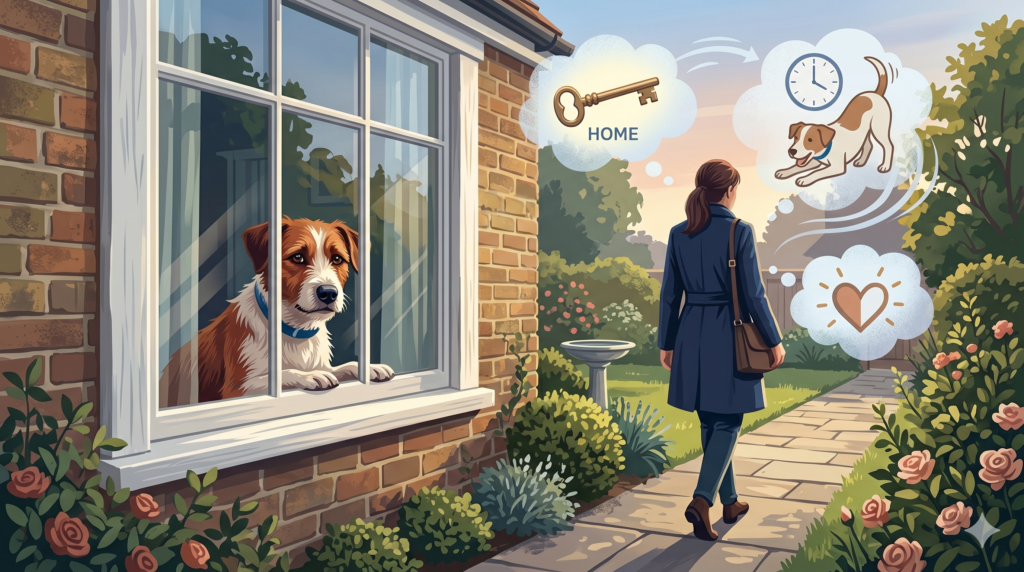
Separation anxiety is one of the most common — and most misunderstood — behavioral problems in dogs. It’s not a training failure, it’s not stubbornness, and it’s not the dog being dramatic. It’s a genuine emotional disorder, and it responds poorly to the approaches most people try first.
This guide covers everything: what dog separation anxiety actually is, what causes it, how to recognize it, and what treatment looks like across the full spectrum from mild to severe. If you’ve already identified what you’re dealing with, use the table of contents to jump to what you need.
IN THIS GUIDE
What It Is and What Causes It
Separation anxiety in dogs is a condition in which a dog experiences genuine distress when separated from their primary attachment figure — usually one specific person. It goes beyond normal dislike of being alone. A dog with separation anxiety isn’t just bored or unhappy; their nervous system is in an actual stress response, with elevated cortisol and adrenaline — the physiological equivalent of panic.
The key diagnostic feature is that the behaviors occur specifically in the owner’s absence. A dog that chews things when bored is a different problem from a dog that targets specifically the door frame after you leave. That specificity is what points to separation anxiety rather than a training gap or general anxiety.
It’s also worth distinguishing separation anxiety from broader generalized anxiety in dogs — some dogs are anxious across many contexts, not only when alone. The two frequently overlap, but they need different treatment approaches.
What causes it
There’s rarely a single cause. The most common contributing factors:
- Sudden routine changes. A schedule shift — returning to the office after working from home, a new job, a child starting school — is one of the most common triggers. The dog had constant access to their person, and that access was abruptly removed.
- Rehoming or adoption. A dog that has lost one home already is primed to be hypervigilant about losing another. Rescue dog anxiety frequently includes a significant separation component.
- Loss of a companion. Dogs grieve, and the loss of a family member or companion pet can destabilize a previously secure dog.
- Lack of early independence training. Puppies that were never taught to be comfortable alone often develop separation anxiety when circumstances eventually require it.
- Genetics and breed predisposition. Some dogs are temperamentally wired for strong human attachment and lower distress tolerance — often the same trait that makes them excellent companions.
- A frightening event during alone time. A storm, a loud noise, or any scary experience that happened while the dog was alone can create a lasting association between solitude and danger. This is one reason storm anxiety and separation anxiety so often co-occur.
WORTH KNOWING
Separation anxiety can also develop gradually with no single identifiable trigger — a slow accumulation of reinforced attachment behaviors over months or years. If you can’t pinpoint what caused it, that’s completely normal. Focus on what you can do about it now.
How to Recognize It — and How Severe
The most reliable signs of separation anxiety in dogs are behaviors that occur specifically — or are significantly worse — when the dog is alone:
- Destructive behavior at exit points. Chewing or scratching focused on doors, door frames, and windows — escape attempts, not random destruction.
- House soiling in a housetrained dog. Accidents when alone are a stress response, not a regression in training.
- Sustained vocalization. Barking, howling, or whining that starts shortly after departure and continues — often reported by neighbors before owners notice.
- Pre-departure anxiety. Pacing, panting, or clinging while you’re still getting ready to leave. The dog has learned to read departure signals — keys, shoes, bag — and starts reacting before you’re even out the door.
- Frantic greeting behavior. A dog that takes 20–30 minutes to settle when you return is showing how distressed the absence was.
THE CAMERA TEST
Set up a camera and watch the first 30 minutes after you leave. This is the single most useful diagnostic step. A dog that settles within 10 minutes is a very different situation from one that paces and vocalizes for the duration. Camera footage also tells you the severity — which shapes the treatment approach.
Mild, moderate, or severe?
Separation anxiety exists on a spectrum, and where your dog falls determines what treatment is realistic.
Mild: The dog is distressed but functional. Brief distress at departure, some pacing, but eventually settles. Camera footage shows visible stress but not sustained panic. Responds well to behavioral modification alone.
Moderate: Distress is more sustained. Vocalization or destructive behavior continues beyond 30 minutes. The dog may not eat anything left for them. Usually benefits from a combination of behavioral work and management; medication is worth discussing with a vet.
Severe: Full panic that doesn’t subside. Self-injury, hours of sustained vocalization, escape attempts that risk physical harm, vomiting or diarrhea from stress. Dogs with extreme separation anxiety at this level almost always need medication alongside behavior modification — behavioral work alone at this baseline is very slow and often ineffective.
GO DEEPER
For a full breakdown of anxiety signs — including the subtle early signals most owners miss — see our signs of anxiety in dogs guide →
Treatment: What Actually Works
There is no quick fix for curing separation anxiety in dogs. That’s worth saying plainly, because a lot of products and approaches are marketed as solutions when they’re really just management tools. Here’s an honest overview.
Behavior modification: the foundation
Systematic desensitization is the only approach that actually reduces the underlying anxiety rather than just managing it. The protocol involves building a history of successful short absences — starting in seconds, not minutes — and very gradually extending duration while keeping the dog consistently under their distress threshold. It requires daily consistency and takes weeks to months. It works.
For the full step-by-step protocol, including how to structure sessions and what to do when progress stalls, see our dog separation anxiety training guide →
Products and tools
Gentle sustained pressure that activates the parasympathetic nervous system. Works for roughly half of dogs. Most useful as a supportive tool during training — not a standalone solution for separation anxiety.
Dog anxiety vest guide →Frozen Kongs, snuffle mats, and long-lasting chews can occupy a dog during the hardest window after departure. Supportive tools, not treatments — a dog in full panic won’t engage with them.
Anxiety toys guide →Adaptil, melatonin, and L-theanine can take the edge off baseline anxiety and support the training process. Not a replacement for behavioral work.
CBD vs. melatonin for dogs →For moderate to severe cases, medication prescribed by a vet reduces baseline anxiety enough for behavioral learning to occur. Options include Sileo, trazodone, fluoxetine, and clomipramine.
Anti-anxiety meds for dogs →Special Situations
Puppies
Puppy separation anxiety is both common and, addressed early, among the most treatable forms. The goal is to build independence from day one — short, planned absences paired with good things, from the first week home. Never make a big production of departures or arrivals. Constant companionship in the early weeks feels kind but creates dependency that becomes harder to unwind later.
Senior dogs
A dog that develops separation anxiety in middle or old age — especially if they were previously secure — should have a vet check before behavioral intervention. Pain, cognitive dysfunction, and thyroid issues can all produce or worsen anxiety. If health causes are ruled out, the same desensitization protocol applies, but expect it to take longer.Senior dog anxiety guide →
Rescue dogs
Rehomed dogs frequently arrive with some degree of separation anxiety or develop it in the first weeks. This is normal — the dog has lost their previous world and hasn’t yet built confidence in the new one. Time, consistency, and gradual independence building resolve most cases.Rescue dog anxiety guide →
Breed-specific anxiety
Some breeds are significantly more prone to separation anxiety — those selected specifically for constant human companionship often need more proactive independence training from puppyhood. French Bulldogs and Chihuahuas are among the most commonly affected.
When one specific person leaves
Some dogs have anxiety specifically when one person leaves — a common pattern in multi-person households where the dog has a single primary attachment figure. The treatment is the same desensitization protocol, but it needs to be done specifically with that person, not just any household member.
Co-occurring anxiety types
Dogs with separation anxiety often have other anxiety presentations too. Fear of strangers, noise phobia, and general fearfulness frequently co-occur — they share an underlying anxious temperament even if the triggers differ.
When to Get Professional Help
Self-directed behavior modification works well for mild to moderate cases when owners are consistent. But some situations need more:
- The dog is injuring themselves. Self-injury during alone time needs immediate professional intervention, not self-directed training.
- No progress after 8+ weeks of consistent work. Usually means the dog needs medication to make behavioral learning possible, or there’s an underlying health issue worth investigating.
- Severe from the start. Severe separation anxiety responds poorly to owner-directed protocols alone. Starting with a veterinary behaviorist saves time and reduces suffering.
Look for a certified applied animal behaviorist (CAAB) or a board-certified veterinary behaviorist (DACVB) — not a general obedience trainer. A corrections-based approach to separation anxiety can make things significantly worse. The IAABC directory and the American College of Veterinary Behaviorists are reliable starting points.
Common Questions
Does my dog have separation anxiety or is he just bored?
The key distinction is specificity and physical stress signs. A bored dog is destructive with anything available and generally improves with more exercise or enrichment. A dog with separation anxiety shows physical stress responses — panting, trembling, dilated pupils — focuses destructive behavior on exit points, and doesn’t meaningfully improve with more stimulation alone. Camera footage during an absence is the most reliable way to tell the difference.
Can separation anxiety be cured?
Many dogs achieve full resolution — meaning they can be left alone for normal periods without distress. Others reach a functional level without complete resolution. Severe, long-standing cases are less likely to fully resolve but can still improve meaningfully. The prognosis is generally better the earlier treatment begins and the more consistently it’s applied.
Will getting a second dog help?
Rarely. Most dogs with separation anxiety are distressed specifically about their person being absent — not about being alone in general. A second dog doesn’t replace you. Some dogs do better with a companion, but this is unpredictable and adds significant complexity. Address the separation anxiety first.
How do I prevent separation anxiety in a new puppy?
Start independence training from day one. Short, planned absences paired with good things — a frozen Kong, a filled chew — from the first week home build a foundation of “alone time is fine.” Avoid constant companionship in the early weeks; it creates dependency that becomes harder to unwind. Short, frequent, boring departures are more protective than anything else.
How long does it take to fix separation anxiety in dogs?
Mild cases: 4–8 weeks of consistent daily work. Moderate to severe: 3–6 months, sometimes longer. Progress is rarely linear — expect good weeks and setbacks. The timeline is determined by how gradually the training proceeds. Going too fast is the most common reason progress stalls.
Ready to start treatment?
The step-by-step desensitization protocol — how to structure sessions, what to do when progress stalls, and how to fit crate training in — is all in one place.
Disclosure: As an Amazon Associate, Calm Dog Lab earns from qualifying purchases. This means if you click on a product link and make a purchase, we may receive a small commission at no extra cost to you.
Pingback: Dog Anxiety Vest: Do They Actually Work? - calmdoglab.com