
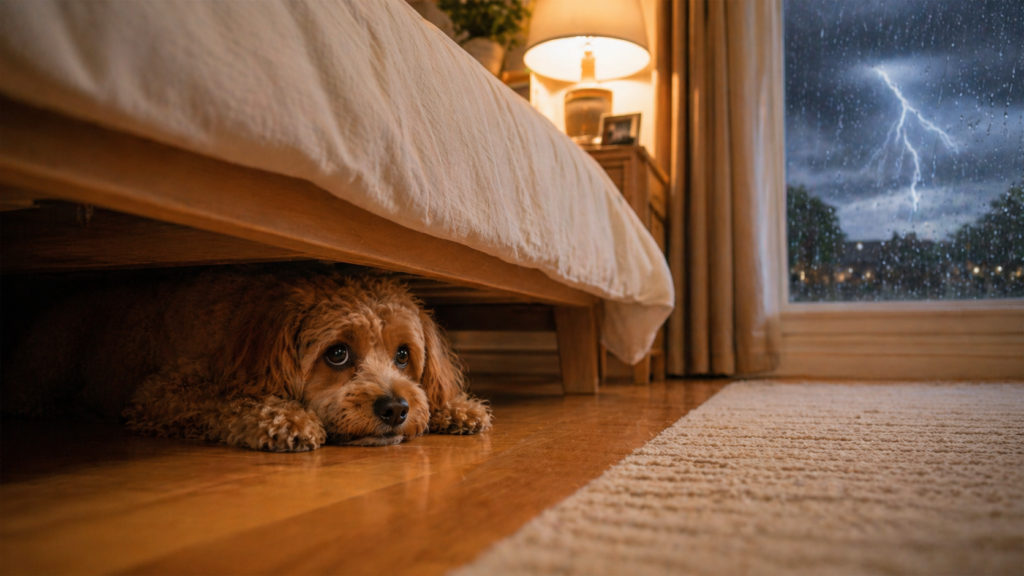
The first time my dog heard a thunderstorm, I thought something was seriously wrong. She’d gone from asleep on the couch to wedged behind the toilet in about thirty seconds. Panting, shaking, pupils dilated. I didn’t know whether to comfort her or call the vet.
I did what most people do — I sat on the bathroom floor and talked to her in a soothing voice for forty minutes. It probably didn’t help. Maybe made it worse.
Storm phobia is one of the more frustrating things to deal with as a dog owner because it feels so urgent in the moment, and the instinct to comfort your dog is completely natural — but it’s also not always the right move. Here’s what actually helps, both in the moment and long-term.
IN THIS GUIDE
Why Dogs Are So Afraid of Storms
It’s not just the thunder. A dog shaking during a storm is responding to a whole cluster of things happening at once — and some of them start before any sound is audible to you.
- Barometric pressure drops before a storm arrives. Dogs are sensitive to this, which is why some start showing anxiety 30–60 minutes before the first thunderclap.
- Static electricity builds up in the air during storms. Some dogs get small static shocks through their fur, especially in dry climates — this can trigger or worsen the fear response significantly.
- The smell changes. Rain, ozone, and atmospheric shifts are detectable to a dog’s nose long before you notice anything.
- Then the sound arrives. Thunder is loud, unpredictable, and impossible to locate clearly — which is particularly distressing for a dog whose safety instinct depends on identifying the source of a threat.
Put all of that together and you get a dog that’s being bombarded by sensory information, can’t identify where the danger is coming from, can’t escape it, and has no way to understand that it will end. If your dog seems scared of many things beyond just storms, it’s worth reading about why some dogs are scared of everything — the underlying mechanisms are often connected. Dog thunderstorm anxiety isn’t irrational from the dog’s perspective — it’s a completely logical response to a sensory experience that is genuinely overwhelming.
It also tends to get worse over time without intervention. A dog that was mildly nervous at three years old can be in full panic by five. That’s worth taking seriously early.
WORTH KNOWING
Thunderstorm anxiety often overlaps with broader dog anxiety. If your dog is generally anxious — not just during storms — the approaches here will help, but you may want to look at the bigger picture too.
What to Do During a Storm
When a storm is already happening, you’re in damage-control mode. You’re not going to fix storm phobia in the middle of a thunderclap — the goal is just to get through it with as little distress as possible.
Create a safe space
Move to an interior room — away from windows and outside walls, where the sound is muffled and there’s less lightning visible. Many dogs naturally gravitate toward bathrooms or closets, and there’s a reason: the enclosed space feels more den-like and secure. Let them lead. If your dog wants to be behind the toilet, that’s fine. Don’t drag them out.
If you have a crate your dog already uses and likes, cover it with a heavy blanket on three sides. The visual containment and reduced sound are genuinely calming for most dogs.
Try a pressure wrap
A ThunderShirt or similar anxiety wrap applies gentle, constant pressure — similar to swaddling. It doesn’t work for every dog, but it works for enough dogs consistently enough to be worth trying before anything else. Put it on before the storm if possible, not mid-panic.
Stay calm, but don’t perform calm
Your dog reads you. If you’re anxious and hovering, that confirms there’s something to be worried about. Being present and relaxed — not dramatically soothing, just normal — is more helpful than active reassurance. You can be in the room. You don’t need to be narrating the experience.
Try grounding activities
For some dogs, engagement helps. A frozen Kong, a lick mat, a chew — something that gives their brain something else to focus on. This works better for dogs with mild to moderate storm anxiety; a dog in full panic won’t engage with food at all.
STATIC ELECTRICITY TIP
If your dog tries to get into the bathtub or presses against metal surfaces during storms, static may be a significant factor. Try rubbing them with an unscented dryer sheet during the storm — it sounds odd but it can genuinely help by reducing static charge in the fur. Some owners find that keeping their dog on tile or in a grounded area makes a noticeable difference.
What Not to Do
A few things that feel right but tend to make storm anxiety worse over time:
- Don’t over-reassure. Sitting with your dog and saying “it’s okay, you’re okay, good boy” repeatedly in an anxious, high-pitched voice can inadvertently reinforce the panic. A calm presence is different from an anxious one.
- Don’t force exposure. Making your dog sit outside or near a window to “get used to it” doesn’t work for phobias. It’s not the same as desensitization — it’s flooding, and it tends to make things worse.
- Don’t punish fear behaviors. A dog that’s destroying the house during a storm isn’t being bad. Punishment during a fear response damages trust and does nothing to reduce the underlying anxiety.
- Don’t wait too long to address it. Storm phobia reliably worsens without intervention. A dog that’s manageable at two can be genuinely dangerous — to themselves or your home — at five.
- Don’t confuse storm anxiety with separation anxiety. Some dogs panic during storms specifically because you leave — the two can overlap. If that sounds familiar, separation anxiety may be part of the picture too.
Long-Term: Desensitization
This is the only approach that actually reduces storm anxiety rather than just managing it. The idea is to gradually expose your dog to storm-related sounds at a low enough volume that they don’t react, pair that with good things, and very slowly raise the intensity over weeks or months.
In practice:
- Find a thunder sounds recording — there are several on YouTube and Spotify specifically for this purpose, including tracks marketed as dog anxiety music thunderstorm recordings.
- Play it at a volume so low your dog barely notices. Watch for any tension or alertness.
- Pair it with treats, a meal, or play. You want the sound to predict good things.
- Over several sessions — not days, weeks — very gradually increase the volume.
- If your dog reacts, you’ve gone too fast. Back down.
The limitation of sound desensitization is that it doesn’t address the static or barometric pressure components. A dog trained to thunder sounds may still react to the full sensory experience of a real storm. It helps, but it’s rarely a complete solution on its own.
Does Music Actually Help?
Yes, with some nuance. Dog anxiety music during thunderstorms works through two mechanisms: masking the sound of thunder, and providing a familiar, predictable auditory environment.
Classical music and certain specially composed tracks (iCalmDog is the most researched) have shown measurable reductions in stress behaviors in shelter dogs. For home use, the consistent finding is that something familiar playing in the background — whatever your dog is used to hearing at home — is more calming than silence, regardless of genre.
Turn it on before the storm if possible, not after panic has set in. Volume should be present but not overwhelming — you’re trying to mask thunder, not replace it with a different stressor.
Products Worth Trying
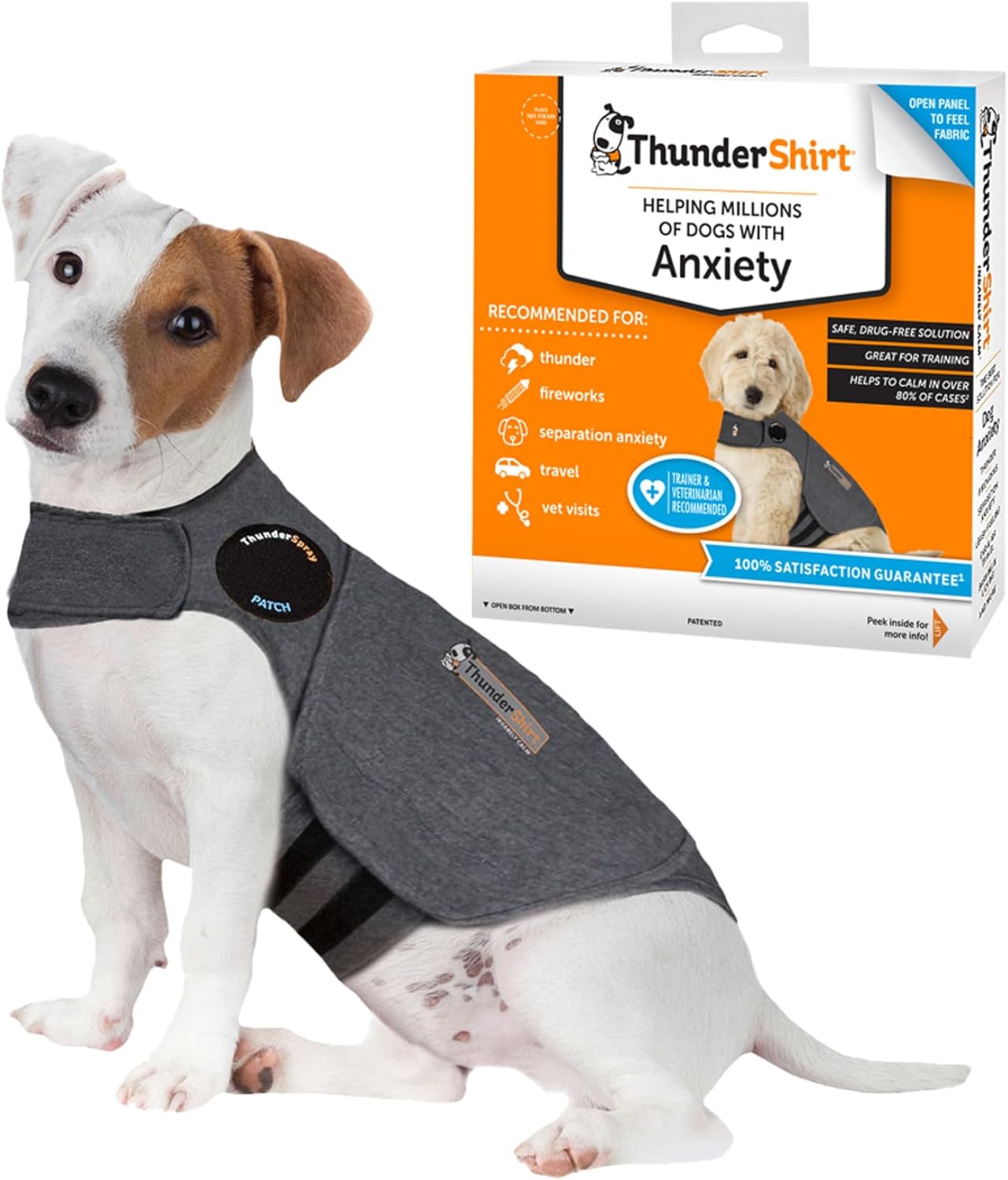
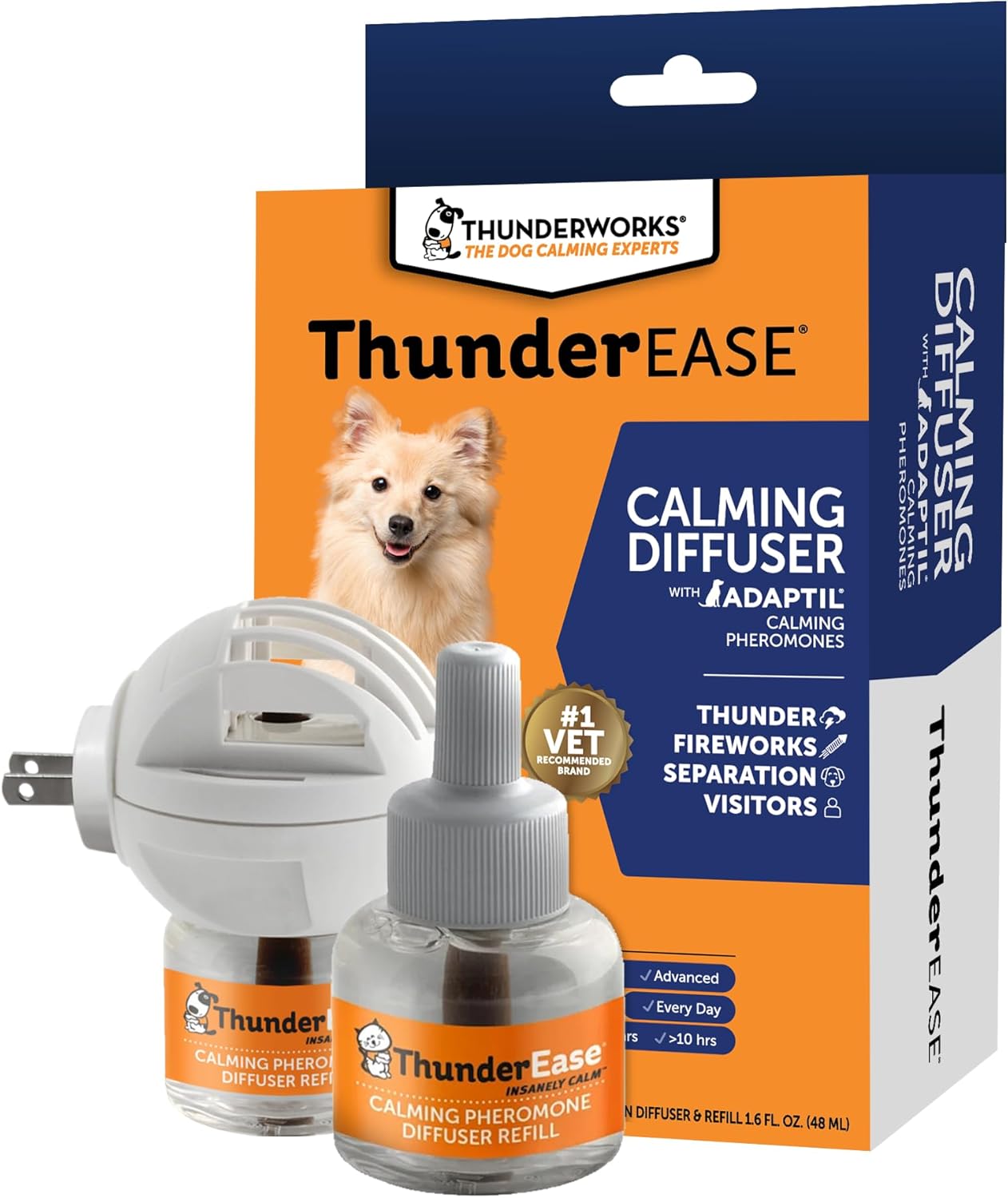

Looking for more calming product options beyond storms? We cover chew toys, comfort toys, and puzzle feeders in our full anxiety toys for dogs guide →
When to Consider Medication
If your dog’s thunderstorm anxiety is severe — full panic, self-injury, destructive behavior, inability to function for hours after a storm — behavioral approaches alone may not be enough, and medication is worth discussing with your vet.
The main options:
- Sileo (dexmedetomidine) — FDA-approved specifically for noise aversion in dogs. Applied as a gel to the gums, works within 30–60 minutes, doesn’t sedate. Currently the most targeted option for storm and noise phobia.
- Trazodone — commonly prescribed as-needed for situational anxiety. Usually given 1–2 hours before anticipated storms. Works well for many dogs, requires some ability to predict when storms are coming.
- Fluoxetine or clomipramine — daily medications for dogs with frequent or severe anxiety. Takes 4–6 weeks to reach full effect. More appropriate for dogs with anxiety in thunderstorms as part of a broader anxiety picture.
- Melatonin — sometimes recommended for mild cases. Low risk, available over the counter, worth trying before prescription options. Evidence is limited but anecdotally useful for some dogs.
IMPORTANT
Avoid acepromazine (sometimes called “ace”) for storm anxiety. It was historically prescribed for this purpose but is now known to sedate the body while leaving the dog mentally aware of the fear — essentially paralyzed but still terrified. Most vets no longer recommend it for anxiety, but it’s worth knowing if you’ve been offered it.
Common Questions
Why does my dog shake so much during thunderstorms?
A dog that shakes during a storm is having a genuine physiological fear response — adrenaline and cortisol flood the body, causing trembling, panting, and restlessness. It’s not dramatic or manipulative behavior; it’s an involuntary stress response. The fact that dogs can detect pressure drops, static electricity, and storm smells before humans hear anything means the anxiety often starts earlier than owners realize.
Will my dog’s thunderstorm anxiety get better on its own?
Rarely. Storm phobia tends to worsen over time without intervention — each bad experience can deepen the fear response. Dogs that are mildly anxious at two or three years old are often significantly more reactive by five or six. Early, consistent desensitization gives the best long-term results. Waiting to see if they “grow out of it” usually means the problem compounds.
Should I stay home with my dog during storms?
If your dog has severe storm anxiety, being home does help in the short term — your presence is genuinely calming. But relying on this long-term isn’t sustainable and doesn’t address the underlying anxiety. The goal should be building your dog’s ability to cope, with your calm presence as support rather than the only thing keeping them functional.
Is thunderstorm anxiety connected to broader dog anxiety?
Often, yes. Dogs with thunderstorm anxiety frequently have higher baseline anxiety levels, and storm phobia can be one expression of a more generalized anxious temperament. If your dog is also nervous around strangers, loud noises, or new environments, it’s worth looking at the bigger anxiety picture rather than just addressing storms in isolation. See our complete dog anxiety guide for more.
My dog is also anxious in the car — are the two related?
Often yes. Car anxiety and storm anxiety share similar roots — unpredictable sensory experiences the dog can’t control or escape. Dogs with one frequently have the other. If car trips are also a problem, the approaches are different enough to warrant their own look — we cover it in our dog car anxiety guide.
Think you’re helping — but making it worse?
Some of the most common ways owners respond to dog anxiety actually backfire. Here’s what to avoid
Disclosure: As an Amazon Associate, Calm Dog Lab earns from qualifying purchases. This means if you click on a product link and make a purchase, we may receive a small commission at no extra cost to you.
Pingback: Separation Anxiety in Dogs: Causes, Signs & How to Fix It