
The short version: Most dogs with car anxiety either have a negative association with riding (fear-based) or are experiencing genuine motion sickness — and the fix is different for each. This guide walks you through telling them apart, a step-by-step desensitization protocol, and the products worth trying.
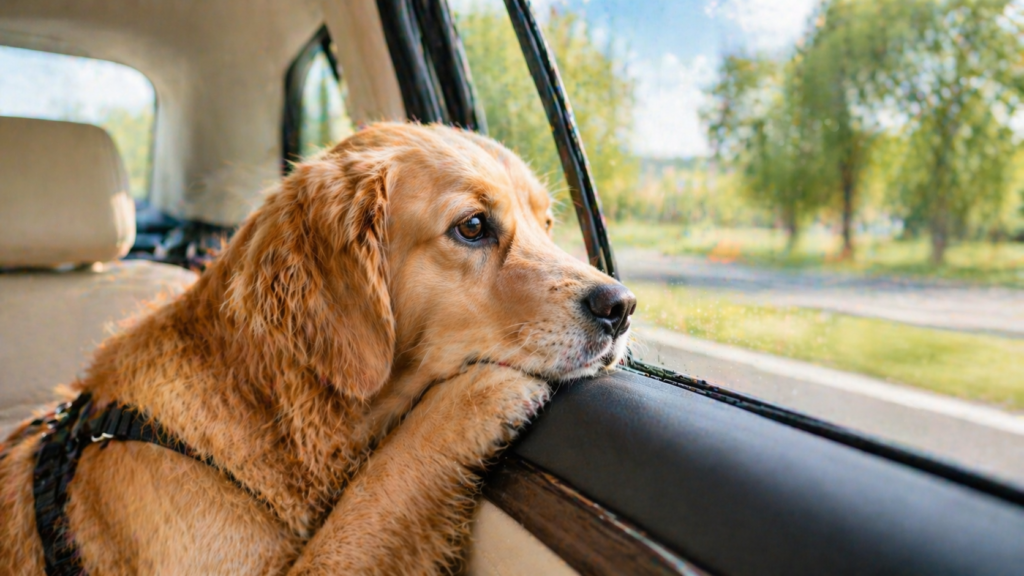
You open the car door and your dog plants all four paws on the ground. Or he climbs in just fine but spends the whole drive panting, drooling, and shaking. By the time you arrive at your destination, you’re both exhausted — and the thought of the drive home already feels daunting.
Car anxiety in dogs is one of the most common behavior complaints veterinarians hear. The good news: it’s also one of the most fixable, once you understand what’s actually going on. The bad news: a lot of the advice out there skips the most important step — figuring out whether your dog is anxious, motion sick, or both.
Let’s get into it.
In this guide
- How to recognize car anxiety
- Car anxiety vs. motion sickness
- Why your dog is scared of the car
- Desensitization training — step by step
- Calming products that can help
- When to consider medication
- Road trip checklist
- Frequently asked questions
How Do I Know If My Dog Has Car Anxiety?
Dogs can’t tell you they’re scared, but their bodies say it loudly. Car anxiety typically shows up in two categories: physical signs and behavioral signs. Some dogs show only one type; many show both.
Physical signs
- Excessive drooling — much more than usual, sometimes soaking the seat
- Panting even when it’s not hot in the car
- Trembling or shaking, especially at the start of the ride
- Vomiting — can be anxiety-related or motion sickness (more on this below)
- Yawning repeatedly — a classic calming signal that indicates stress
- Ears pinned back, tail tucked low
Behavioral signs
- Refusing to get in the car — planting paws, pulling backward on the leash
- Whining or barking continuously during the ride
- Pacing or circling in the back seat
- Trying to climb into the front or onto your lap while driving
- Hiding or freezing when you pick up your keys
- Extreme fatigue after short trips — stress is genuinely exhausting
Worth noting: Some dogs show anxiety symptoms before the car even moves — triggered just by seeing your keys or jacket. This is a strong sign the problem is psychological (negative association) rather than motion-related.
Car Anxiety vs. Motion Sickness — What’s the Difference?
This distinction matters a lot, because the solutions are quite different. A dog with motion sickness won’t improve much with calming supplements alone; a dog with pure fear-based anxiety doesn’t necessarily need medication.
| Factor | Car Anxiety | Motion Sickness |
|---|---|---|
| Primary cause | Fear, negative associations, past trauma | Inner ear imbalance, vestibular system |
| More common in | Adult dogs, rescue dogs | Puppies (often improves with age) |
| Symptoms start | Before the car moves — even at sight of keys | After the car starts moving |
| Main symptoms | Panting, trembling, behavioral shutdown | Drooling, vomiting, listlessness |
| Primary solution | Desensitization training | Medication, positioning, feeding adjustments |
Many dogs have both. A puppy who gets motion-sick enough times will start to associate the car with nausea, developing anxiety on top of the physical issue. If you’re not sure which one you’re dealing with, start by addressing motion sickness — it’s easier to rule out and, if present, makes training almost impossible anyway.
Why Is My Dog Scared of the Car?
Understanding the root cause helps you choose the right approach. The most common reasons dogs develop car anxiety include:
Negative associations
For many dogs, the car means only one thing: the vet. Or the groomer. Or the boarding facility. If the vast majority of car trips end somewhere unpleasant, your dog has simply learned to be afraid of the car itself. This is one of the most straightforward causes to address — because it’s entirely created by pattern, and patterns can be changed.
Lack of early exposure
Dogs who weren’t introduced to cars during the critical socialization window (roughly 3–14 weeks of age) often find them strange and overwhelming as adults. The noise, vibration, movement, and smells are all unfamiliar — and unfamiliar things are scary to an under-socialized dog.
A past traumatic experience
A single bad experience — a car accident, a sudden hard stop, getting carsick badly, or being left alone in a hot car — can create lasting fear. Dogs have excellent emotional memories, especially for threatening events.
The motion sickness cycle
As mentioned above: nausea leads to fear leads to more nausea. Dogs who’ve been carsick multiple times often start anticipating the discomfort before the car even moves, which triggers a stress response that makes the nausea worse.
Quick test: Sit in a parked, engine-off car with your dog and some high-value treats for 10 minutes. If your dog is relatively relaxed, the problem is likely motion-related. If your dog is already anxious in a stationary car, it’s fear-based.
Desensitization Training — The Most Effective Long-Term Fix
This is the part most people skip — and it’s the reason most “quick fixes” don’t stick. Desensitization means gradually exposing your dog to the car in a positive context, starting so small that no fear response is triggered, and building up very slowly over time.
It requires patience. It takes weeks, not days. But it’s the only approach that actually changes how your dog feels about the car, rather than just masking symptoms temporarily.
The most common mistake: Moving too fast. The moment your dog shows any sign of stress (yawning, lip-licking, looking away), you’ve gone too far. Go back a step. Progress that triggers anxiety is not progress — it reinforces the fear.
The 5-week protocol
Week 1 — Near the car, not in it
Walk your dog past the parked, engine-off car. Give high-value treats (cheese, chicken, whatever your dog goes crazy for) just for being in its presence. Keep sessions to 5–10 minutes. End on a positive note before any stress appears. Repeat daily.
Week 2 — In the car, engine off
Open the car door and let your dog choose to get in. Don’t lift or force them. Toss treats inside and let them eat and exit freely. If they won’t get in voluntarily, keep feeding treats at the door threshold until they’re comfortable stepping in on their own. Close the door briefly, treat, open again.
Week 3 — Engine on, not moving
Once your dog is comfortable in the stationary car, start the engine while they’re inside. Don’t move. Feed treats, keep the session short (5 minutes), turn the engine off, and end the session. The goal is for “engine noise” to predict “good things happen.”
Week 4 — Very short drives
Drive around the block. Literally. One minute, back home, treats and praise. Gradually extend: five minutes, then ten, then fifteen. Always end somewhere positive — back home, or at a park your dog loves. Avoid the vet or groomer entirely during this phase.
Week 5 and beyond — Build duration and vary destinations
Now start mixing in fun destinations: dog-friendly parks, a friend’s house, anywhere your dog enjoys. The car becomes a portal to good things, not just bad ones. Keep having some trips that go nowhere — just a drive and back home — so the car itself stays neutral.
Tip for dogs who won’t get in voluntarily: Try feeding your dog all their meals in the parked car (engine off, door open) for a week. Hunger is a powerful motivator, and eating is inherently calming. Most dogs start choosing to hop in on their own within a few days.
Environmental adjustments that help during training
- Use a crate or dog seat belt — being secured reduces the physical sensation of movement and gives anxious dogs a defined “safe space”
- Back seat is better than front — less visual motion stimulation, and further from airbags
- Crack the windows — fresh air reduces nausea and provides calming sensory input
- Bring a worn T-shirt or their favorite blanket — familiar scent is genuinely calming for dogs
- Don’t feed within 2 hours of a drive — an empty stomach dramatically reduces motion sickness
Calming Products That Can Help
Products work best as a complement to training, not a replacement for it. That said, some dogs are so anxious that they can’t make training progress without a bit of help first — calming the nervous system enough to actually learn.
Here are the categories worth considering, roughly in order of evidence strength:
Anxiety wraps (ThunderShirt and alternatives)
Anxiety wraps apply gentle, constant pressure — similar to swaddling a baby — which activates the parasympathetic nervous system and reduces arousal. They work for roughly 60–80% of dogs based on owner reports, though the effect varies. Put it on at least 30 minutes before you reach the car so it has time to work.
Calming chews and supplements
The market is flooded with calming supplements — most are a blend of ingredients like L-theanine, melatonin, chamomile, valerian root, or CBD. Quality varies enormously. Look for products with third-party testing and clear ingredient labeling.
Pheromone products (Adaptil)
Adaptil replicates the “dog appeasing pheromone” produced by nursing mothers — a chemical signal that communicates safety. The car spray version is applied directly to the interior 15 minutes before your dog gets in. Evidence is mixed, but it’s drug-free and has no side effects. Worth trying, especially for dogs separated from their mother early.
When to Consider Medication
Some dogs’ anxiety is severe enough that training alone — even with calming products — isn’t enough to make progress. In these cases, medication can lower the baseline stress level so training actually has a chance to work.
This is not a failure. It’s the same logic as treating depression with both therapy and medication: sometimes you need to address the physiological component before behavioral work can take hold.
For motion sickness specifically
Cerenia (maropitant) is a prescription anti-nausea medication specifically approved for dogs with motion sickness. It’s highly effective, fast-acting, and generally well-tolerated. If your dog’s car issues are primarily vomiting and nausea, this is the first thing to ask your vet about.
For anxiety specifically
- Trazodone — a mild sedative/anxiolytic often prescribed situationally (before trips, vet visits). Requires a prescription. Works well for many dogs with situational anxiety.
- Gabapentin — primarily a pain medication but also used off-label for anxiety. Calming effect is more sedating than Trazodone.
- Sileo (dexmedetomidine) — a newer option specifically approved for noise aversion and situational anxiety in dogs. Fast-acting gel applied to the gum.
Important: All of these require a veterinary prescription. Never give your dog human anti-anxiety medication — many (including benzodiazepines like Xanax) can cause paradoxical reactions in dogs, making anxiety worse. Benadryl is sometimes used for mild situations, but discuss with your vet first.
Road Trip Checklist for Anxious Dogs
Before you leave
- Start desensitization practice at least 2–4 weeks before a major trip
- Skip breakfast if your dog tends toward motion sickness (or feed at least 3 hours prior)
- Put the ThunderShirt on 30 minutes before departure
- Give calming chews 45–60 minutes before departure
- Spray Adaptil on the back seat blanket 15 minutes before your dog gets in
- Bring their bed, a worn shirt of yours, and their favorite toys
- Confirm your dog has had a toilet break right before loading
During the drive
- Stop every 2 hours for a walk, water, and a toilet break
- Keep the car cool — heat dramatically worsens anxiety and nausea
- Crack the windows slightly for fresh air
- Play calming music (Through a Dog’s Ear is specifically composed for dogs)
- Don’t make a big fuss over your dog’s anxiety — calm, matter-of-fact energy from you helps
- Avoid eye contact and excessive reassurance during anxious moments (it can reinforce the behavior)
When you arrive
- Give genuine praise and a high-value treat immediately on arrival
- Let your dog decompress with a slow sniff walk before going inside
- Don’t overstimulate immediately after — a calm arrival is part of the pattern you’re building
Breed-Specific Notes
While any dog can develop car anxiety, some breeds are more predisposed due to their temperament, physical structure, or working history:
- French Bulldogs and other brachycephalic breeds — their compromised airways mean they overheat faster and struggle to pant effectively, making car rides genuinely harder on their physiology. Keep the car very cool and limit trip length. Read more about anxiety in French Bulldogs →
- Chihuahuas — tend toward high baseline anxiety and are more reactive to environmental stimulation. Often benefit from covered crates in the car. Read more about Chihuahua anxiety →
- German Shepherds — highly alert working dogs that can become overstimulated by the visual movement outside the windows. Crating or using a car shade can help reduce visual input. Read more about German Shepherd anxiety →
- Rescue dogs — often have unknown histories that include car-related trauma. Expect the desensitization process to take longer, and go extra slowly in the early stages.
Frequently Asked Questions
My dog was totally fine in the car before — why is he suddenly scared?
A single negative experience can flip the switch on a previously car-comfortable dog — a near-accident, a very rough drive, getting carsick once, or even a frightening event that happened to coincide with a car ride. In senior dogs, it can also be the onset of cognitive dysfunction or vestibular disease. If the change was sudden and your dog is over 8 years old, mention it to your vet. For a full breakdown of why older dogs develop new anxiety and what to do about it, see our senior dog anxiety guide.
Can I give my dog Benadryl for car anxiety?
Diphenhydramine (the active ingredient in Benadryl) does have mild sedative effects in dogs, and some vets recommend it for mild situational anxiety. The standard dose is 1mg per pound of body weight. However, it doesn’t work for all dogs, can cause dry mouth and urinary retention, and is contraindicated in dogs with certain conditions. Check with your vet before using it, especially if your dog takes other medications.
How long does desensitization training take?
For mild cases, you might see significant improvement in 3–4 weeks. Moderate anxiety typically takes 6–10 weeks of consistent daily practice. Severe anxiety — especially in rescue dogs with trauma history — can take 3–6 months. The key variable is consistency. Sporadic training doesn’t compound the way daily practice does.
Should I crate my dog in the car?
For dogs who are already crate-trained and find their crate comforting, yes — a secured crate in the back reduces visual stimulation and gives them a defined safe space. For dogs who aren’t crate-trained or find crates stressful, forcing it can make car anxiety worse. A well-fitted harness with a seat belt attachment is a good alternative.
Is it cruel to take an anxious dog on car rides?
Avoiding car rides entirely isn’t a long-term solution — your dog needs to get to the vet, and most dogs’ lives are richer when they can travel. The goal isn’t to force a scared dog into stressful situations; it’s to use training to change how they feel about the car so it stops being stressful. Done correctly, desensitization is humane and effective.
My dog only gets anxious on long drives, not short ones. What does that mean?
This pattern strongly suggests motion sickness rather than pure anxiety — the discomfort builds over time. Address the physical component first: don’t feed within 3 hours of departure, keep the car cool and well-ventilated, and ask your vet about Cerenia for longer trips. Once motion sickness is managed, any remaining anxiety can be addressed with training.
Pingback: French Bulldog Anxiety: Causes, Signs & What Actually Helps (2026)