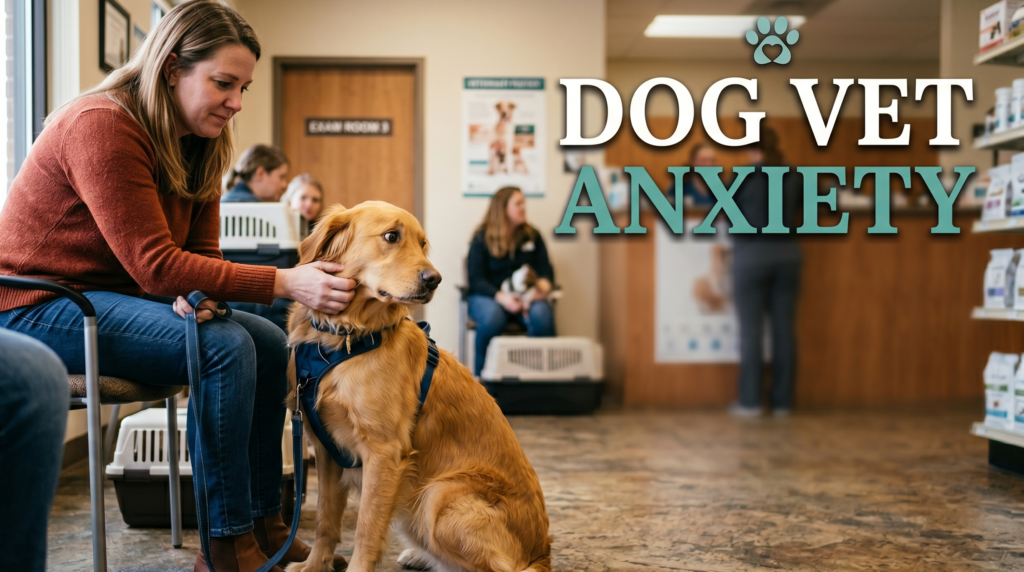
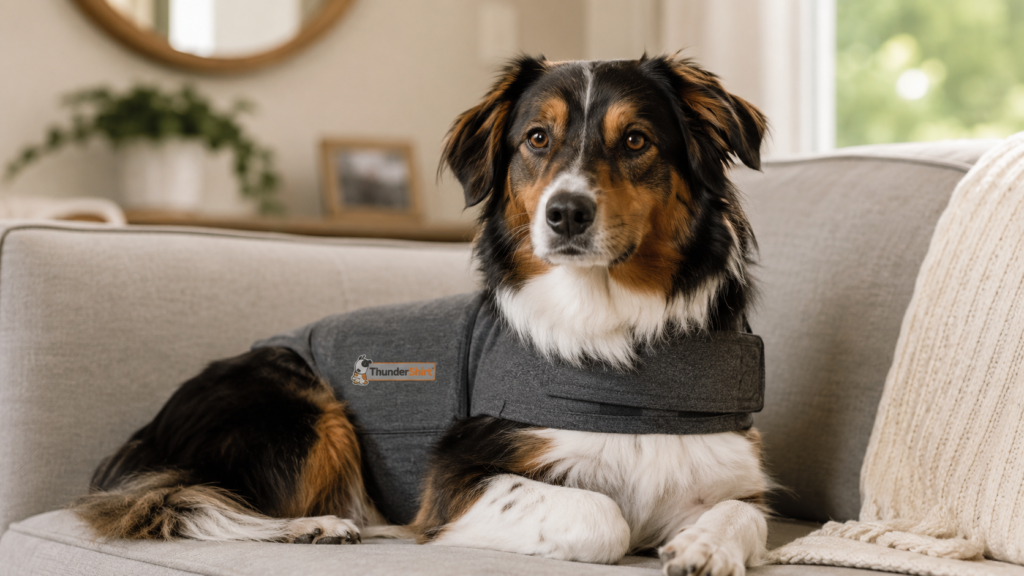
The first time I tried a ThunderShirt on my dog, I was skeptical. It seemed like the kind of thing that works because you want it to work — a placebo for anxious dog owners more than anxious dogs.
Then she fell asleep during a thunderstorm. First time in three years.
That said, anxiety vests for dogs don’t work for every dog, and knowing when they help — and when they don’t — will save you both money and frustration. Here’s an honest look at the evidence, the best options worth buying, and a free DIY version to test before spending anything.
IN THIS GUIDE
How Anxiety Vests Work — and When They Don’t
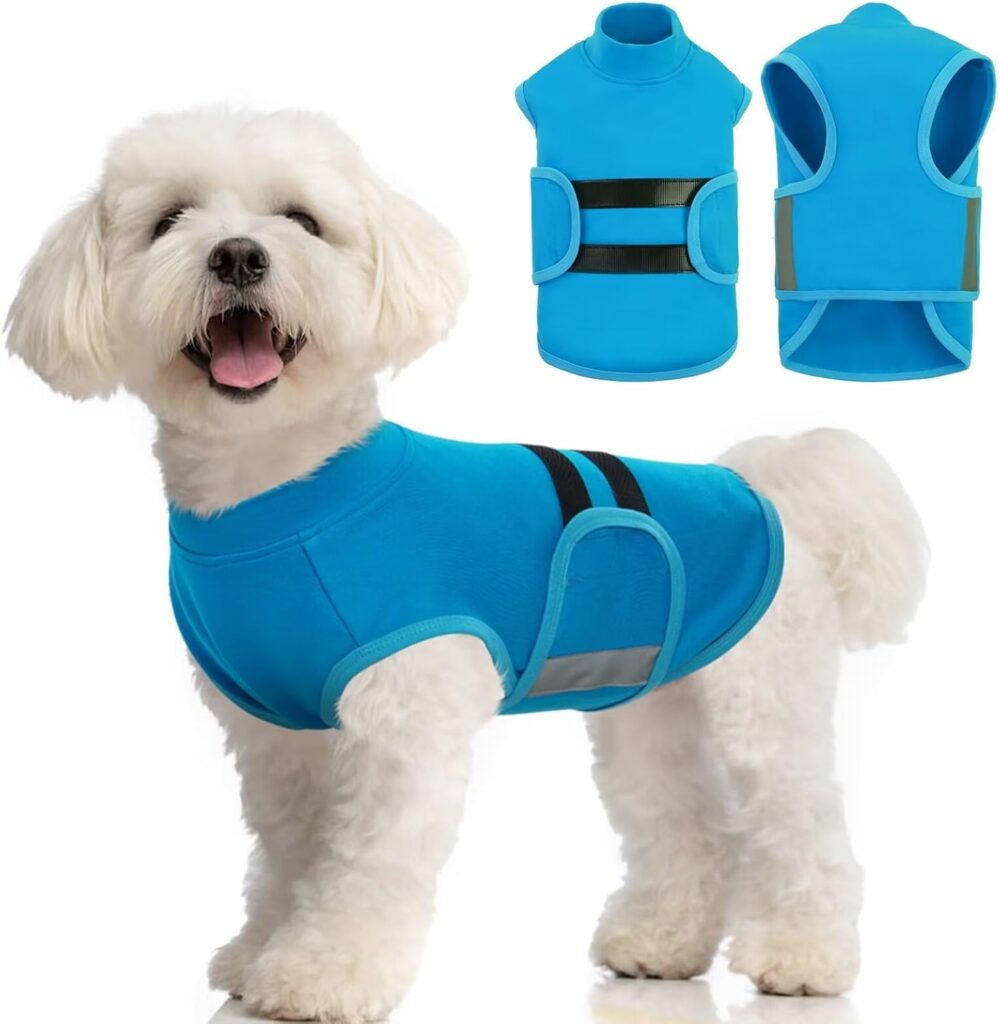
The mechanism is pressure. A snug-fitting dog anxiety vest applies gentle, constant compression across the chest and torso — similar to swaddling an infant, or how a firm hug can reduce stress in humans. Sustained pressure activates the parasympathetic nervous system, reducing the flood of cortisol and adrenaline that drives anxiety. Dogs that respond well typically show calmer breathing, less pacing, and reduced vocalization within 15–30 minutes.
ThunderShirt’s own data claims an 80% success rate — but that’s manufacturer-reported. Independent research is more modest, showing meaningful improvement in roughly half of dogs tested. Still, a 50% chance of meaningful improvement with low risk and easy returns is worth trying.
Where they tend to work well:
- Mild to moderate situational anxiety — storms, fireworks, car travel, vet visits
- Dogs that are touch-sensitive and respond well to physical contact
- As part of a broader calming approach, not as a standalone fix
Where they tend not to work:
- Severe anxiety or full panic — a dog already in crisis is past the point where gentle pressure helps
- Separation anxiety — distress comes from your absence, not sensory overwhelm, so pressure wraps rarely address the root cause
- Dogs that dislike wearing anything — the stress of the vest itself can outweigh any calming effect
KEY RULE
Put the vest on before anxiety peaks — 20–30 minutes before an anticipated trigger like a storm or car trip. A vest applied mid-panic is far less effective than one put on while the dog is still calm. Don’t leave it on all day either — constant wear reduces the effect as the nervous system habituates to the pressure.
What about weighted vests?
A weighted dog vest for anxiety adds distributed weight across the body — similar to a weighted blanket for humans. The proprioceptive input is thought to promote additional grounding beyond simple compression. Evidence is thinner than for standard pressure vests, but some owners report better results, particularly for dogs with generalized anxiety rather than situational phobias. Worth considering if a standard vest hasn’t worked and your dog generally responds well to being held. They run warmer and heavier though — not ideal for summer or small senior dogs.
Best Anxiety Vests for Dogs
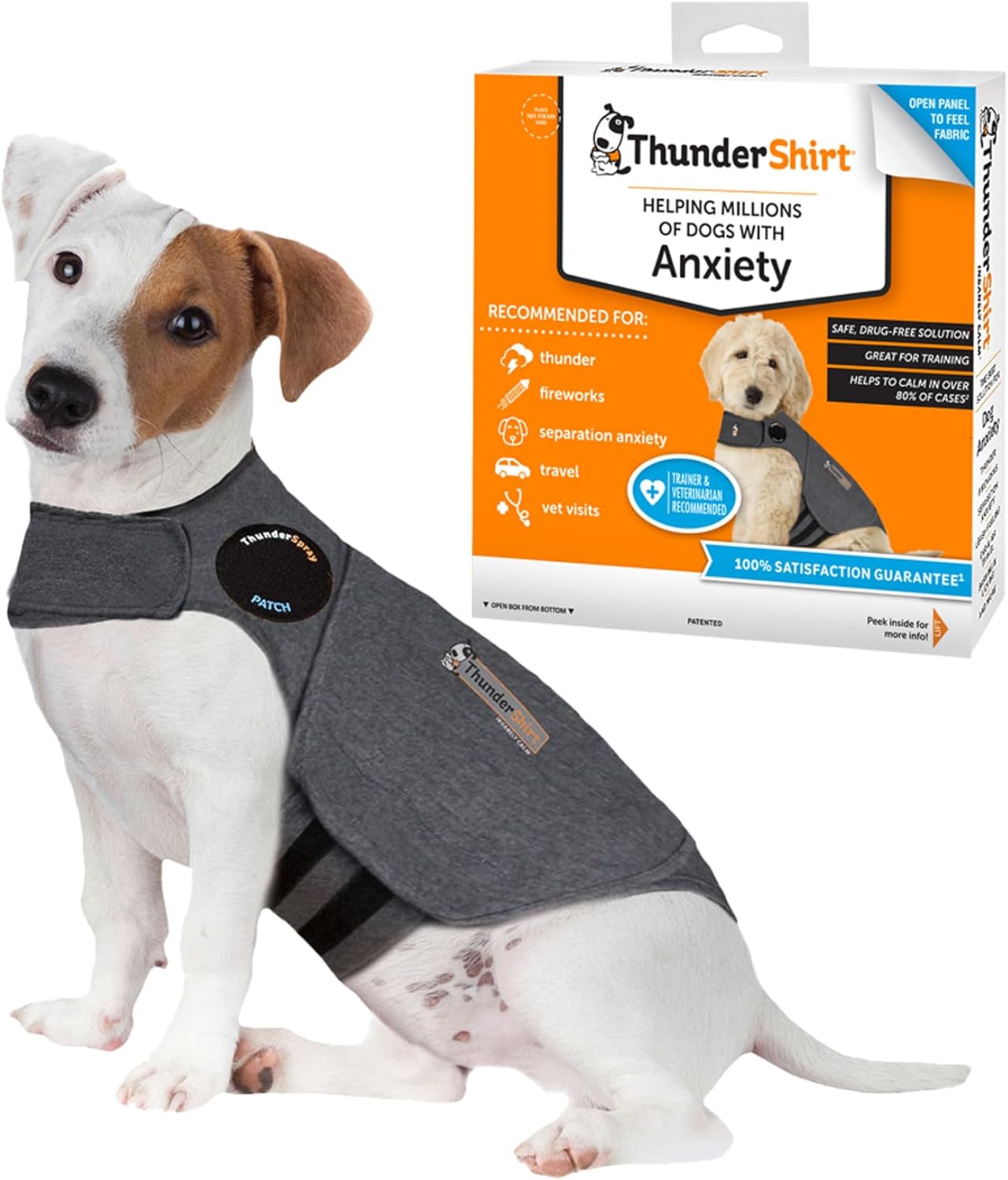
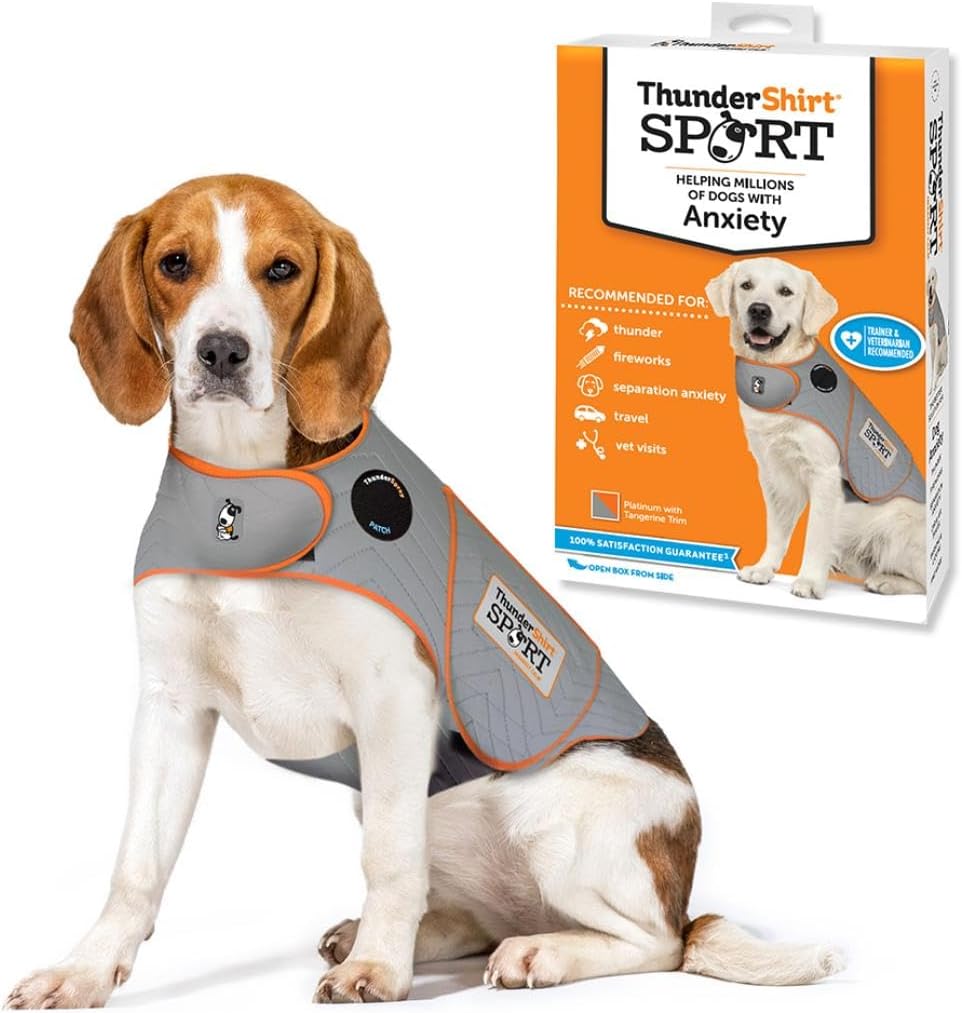
Most of the market is variations on the same design. These are the options consistently worth recommending:
RELATED
An anxiety vest is one tool in a broader toolkit. For a full overview of what helps anxious dogs — including toys, supplements, and behavioral approaches — see our anxiety tools guide →
DIY Thundershirt: How to Make One Free
Before buying anything, there’s a legitimate free option: an ace bandage wrap that replicates the pressure mechanism of a commercial vest. It’s the standard recommendation from trainers and behaviorists for testing whether your dog responds to pressure at all — if the wrap doesn’t help, a commercial vest probably won’t either.
You need: one 2-inch ace bandage (about $3 at any pharmacy).
- Start at the chest – Place the middle of the bandage across your dog’s chest, just below the neck. Hold one end in each hand.
- Cross over the back – Bring both ends up and cross them over your dog’s back, forming an X between the shoulder blades.
- Wrap under the belly – Bring both ends down and around under the belly. Snug but not tight — two fingers should slide underneath easily.
- Secure at the back – Bring the ends back up and tie or clip them on the back, away from the spine. The wrap should feel like a gentle, sustained hug.
Check the fit
Snug enough to feel like gentle pressure — never tight enough to restrict breathing or movement. Check every few minutes the first time to make sure it hasn’t shifted. Never leave a DIY wrap unsupervised.
If your dog responds well — calmer breathing, less pacing, able to settle — a commercial vest will likely work even better. No response after a few trials means pressure wraps probably aren’t the right tool, and you’ve saved yourself the purchase.
Common Questions
Do anxiety vests work for separation anxiety?
Generally not well. Separation anxiety is triggered by your absence — pressure wraps don’t address that root cause. Some dogs may settle slightly faster with a vest on, but structured desensitization is what actually works for separation anxiety. A vest can be a supporting tool, not the solution.
How long does it take for a dog anxiety vest to work?
Most dogs that respond show a change within 15–30 minutes of putting the vest on. If there’s no response after an hour in a calm environment, the vest is unlikely to work for that dog. Give it a few separate trials before concluding it doesn’t help — some dogs need a few sessions to settle into the feeling.
Can my dog wear an anxiety vest all day?
Not recommended. Constant wear reduces the calming effect as the nervous system habituates to the pressure and stops registering it. Use it situationally — for specific triggers — rather than as permanent wear. Most vests can also cause rubbing or overheating with extended daily use.
What size anxiety vest does my dog need?
Measure chest girth (the widest point just behind the front legs) rather than going by weight alone — body shape varies a lot between breeds. When between sizes, go smaller: the vest needs to be snug to work. ThunderShirt’s sizing guide is accurate and includes a measurement chart.
Is anxiety affecting more than just storms?
A vest helps in the moment — but if anxiety is a bigger pattern, it’s worth understanding what’s driving it.
Disclosure: As an Amazon Associate, Calm Dog Lab earns from qualifying purchases. This means if you click on a product link and make a purchase, we may receive a small commission at no extra cost to you.