
Introduction
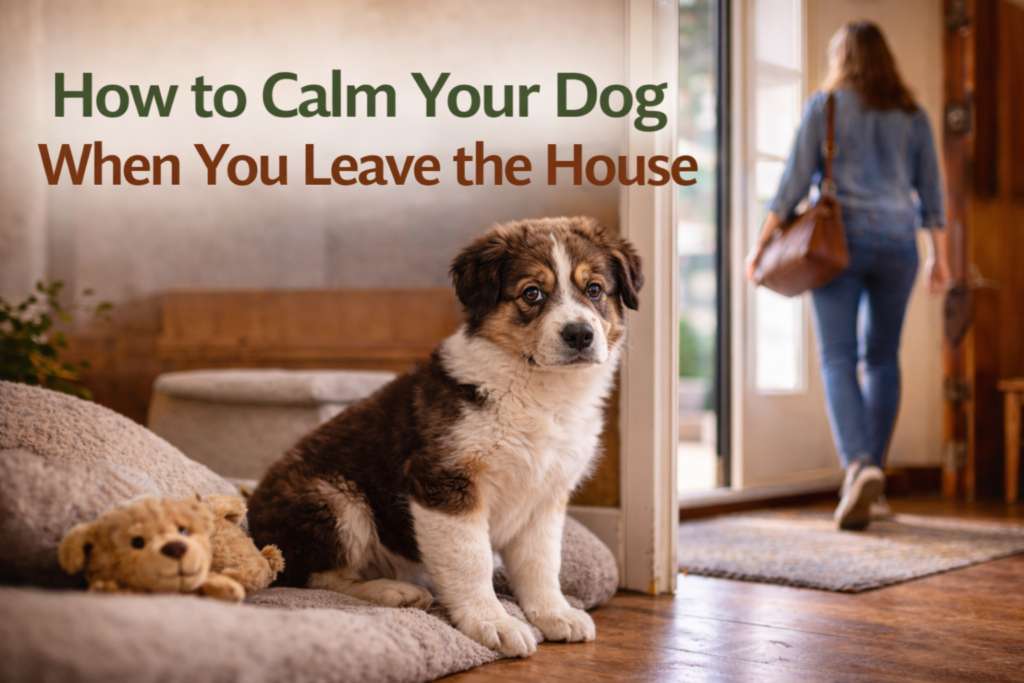
One of the most heartbreaking behaviors you’ll witness as a dog owner is your dog’s reaction when you leave the house.
Whether it’s barking incessantly, pacing, or tearing up the furniture, it’s clear that your dog is anxious and distressed.
But here’s the good news: This behavior is fixable. With the right steps, you can teach your dog how to stay calm and relaxed when you leave.
In this article, we’ll explore 7 effective ways to calm your dog when you leave the house, so you can enjoy your time away — without the worry of what’s happening at home.
1. Create a Consistent Departure Routine
Dogs thrive on routine, and a consistent departure routine can help reduce their anxiety. The key is to make your departure predictable but not emotionally charged.
What to Do:
- Pick up your keys 5–10 minutes before leaving: Don’t rush out the door. Instead, make this part of your routine.
- Avoid saying goodbye: Saying goodbye can signal to your dog that something big is happening, making them anxious.
- Have a set “goodbye” phrase: Use a calm, neutral phrase like “I’ll be back soon” and stick to it.
By making your departure as calm and predictable as possible, your dog won’t feel anxious or uncertain about your leaving.
2. Increase Physical Exercise Before You Leave
A tired dog is a calm dog. If your dog has excess energy, they are more likely to become anxious and destructive when left alone.
What to Do:
- Go for a walk or run: A 20–30 minute walk before you leave will help burn off that excess energy.
- Interactive play: Play games like fetch or tug-of-war, which engage both mentally and physically.
- Mental stimulation: Use food puzzles or interactive toys that challenge your dog’s mind.
Physical and mental stimulation before you leave can help your dog settle down once you’re gone.
3. Use a Crate or Safe Space
Crating your dog, or providing a safe space, can give your dog a sense of security when you’re not around. It’s important that the space feels safe and comfortable for them.
What to Do:
- Make the crate a positive place: Use it for rest and relaxation, not just when you leave. Place a comfortable bed, a favorite toy, or a blanket inside.
- Limit access to the house: If your dog has free reign over the house, they may feel overwhelmed. A safe, enclosed space can be calming.
A crate or designated space gives your dog a sense of control and comfort, reducing anxiety.
4. Leave Them with Something to Do
When you leave your dog alone, make sure they have something engaging to focus on. This can distract them from your absence and help alleviate anxiety.
What to Do:
- Chew toys: Durable chew toys or bones can keep your dog busy.
- Interactive toys: Food puzzles or treat-dispensing toys will challenge their mind and keep them engaged.
- Snuffle mats: These mats encourage natural foraging behavior and can keep your dog distracted for a long time.
By leaving something for your dog to do, you give them an outlet for their energy and anxiety.
5. Use Calming Products
There are several products designed specifically to calm anxious dogs when you leave. These products can help reduce the intensity of your dog’s anxiety.
What to Do:
- Calming collars: These collars release pheromones that mimic a mother dog’s scent, which helps your dog feel more secure.
- Anxiety vests: These apply gentle pressure to your dog’s body, providing a calming effect.
- Calming sprays: Products that release calming scents, like lavender or chamomile, can help soothe your dog’s nerves.
These tools aren’t a cure-all, but they can provide your dog with added comfort when you’re not there.
6. Don’t Overreact to Their Anxiety
It’s natural to feel bad when your dog is anxious, but overreacting can make the situation worse. If your dog senses your distress, they may feel even more anxious.
What to Do:
- Stay calm: Don’t make a big deal of leaving or returning. If you’re calm, your dog will sense that.
- Avoid babying: While it’s tempting to comfort your dog when you leave, doing so reinforces the anxious behavior. Instead, keep it low-key and neutral.
Your dog will pick up on your emotions. The calmer and more neutral you are, the better your dog will feel.
7. Practice Short Departures and Gradually Increase Time
One of the best ways to train your dog to be calm when you leave is through gradual desensitization. This method involves leaving for short periods at first, then increasing the time you’re gone.
What to Do:
- Start with very short departures: Leave for 2–3 minutes, then return. Gradually increase the time, making sure your dog remains calm each time.
- Don’t rush: Increase the time slowly. If your dog shows signs of anxiety, step back and work with shorter intervals.
The goal is to teach your dog that your leaving isn’t a big deal and that you always return.
Conclusion
Leaving your dog alone can be challenging, but with a little effort and consistency, you can help your dog feel more relaxed and secure.
By creating a predictable routine, providing plenty of mental and physical stimulation, and using calming tools, you can ease your dog’s anxiety and make departures less stressful for both of you.