
Search for the best calming treats for dogs and you’ll find hundreds of products promising to take the edge off storms, vet visits, and long days home alone. Some of them are worth trying. Many are mostly marketing.
Here’s what this guide does: it explains what calming treats (also sold as calming chews, calming bites, and calming supplements) can and can’t do, which ingredients have any research behind them, and which products we’d start with. It also covers when a treat isn’t the right tool at all.
IN THIS GUIDE
Do Calming Treats for Dogs Actually Work?
For some dogs, mildly, yes. But it helps to be clear about what you’re buying. Calming treats for dogs are supplements, not medications, and the research behind them is thinner than the packaging suggests. Most products are blends, and a lot of the ingredients in those blends have little or no research in dogs.
A few ingredients do have some evidence, mostly from small studies. Here’s how the common ones stack up:
| Ingredient | What it is | What the research says |
|---|---|---|
| L-theanine | Amino acid found in tea | Some small studies, including one open-label study in storm-sensitive dogs. Promising, not conclusive. |
| Alpha-casozepine | Peptide from milk protein | More research than most calming ingredients, mainly small studies. Often seen as the best-supported over-the-counter option. |
| Melatonin | Hormone that regulates sleep | Used by vets for situational fear (storms, fireworks, vet visits) and restless nights. Helps some dogs. |
| L-tryptophan | Amino acid | Mixed. One study of a diet containing it showed benefit, another showed no effect on anxiety. |
| Chamomile, valerian, passionflower, ashwagandha | Herbs | Very little dog-specific research. Common in formulas, benefit unproven. |
| Hemp seed powder | Ground seed (not CBD) | Little evidence for anxiety. See our CBD vs melatonin guide. |
WORTH KNOWING
Supplements aren’t reviewed by the FDA for safety or effectiveness before they’re sold, and quality varies a lot between brands. Treat a calming treat as one piece of a plan, alongside training and a predictable routine, not as a fix on its own.
Best Calming Treats for Dogs
We picked products with clearly labeled active ingredients, a formula that includes at least one ingredient with some research behind it, and a track record of being easy to find. Not every dog responds to every product, so think of these as starting points.
| If your dog… | Type | Best starting point |
|---|---|---|
| Has mild everyday stress and you want an easy first try | Soft chew | Zesty Paws Calming Bites |
| Needs a simple formula without herbs | Soft chew | VetriScience Composure |
| Has ongoing anxiety and you’re working with a vet | Capsule | Zylkene |
| Struggles with storms and fireworks | With melatonin | Zesty Paws Advanced Calming Bites |
Top pick
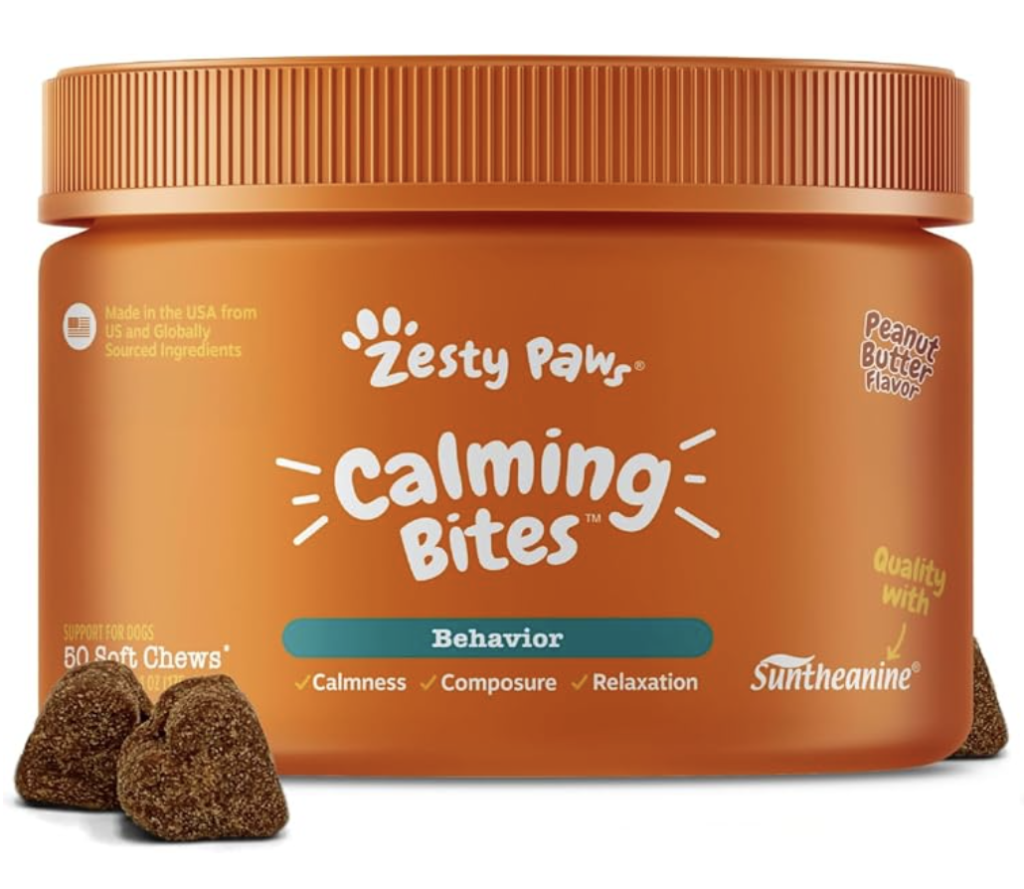
Zesty Paws Calming Bites
The most-searched calming chew, and easy to see why: it’s widely available, dogs like the taste, and the formula covers the ingredients most people look for, including L-theanine (Suntheanine), ashwagandha, chamomile, valerian root, L-tryptophan, and magnesium. The label describes it for dogs with normal stress. There’s also an Advanced version that adds melatonin, so check which one you’re buying.
Simple formula
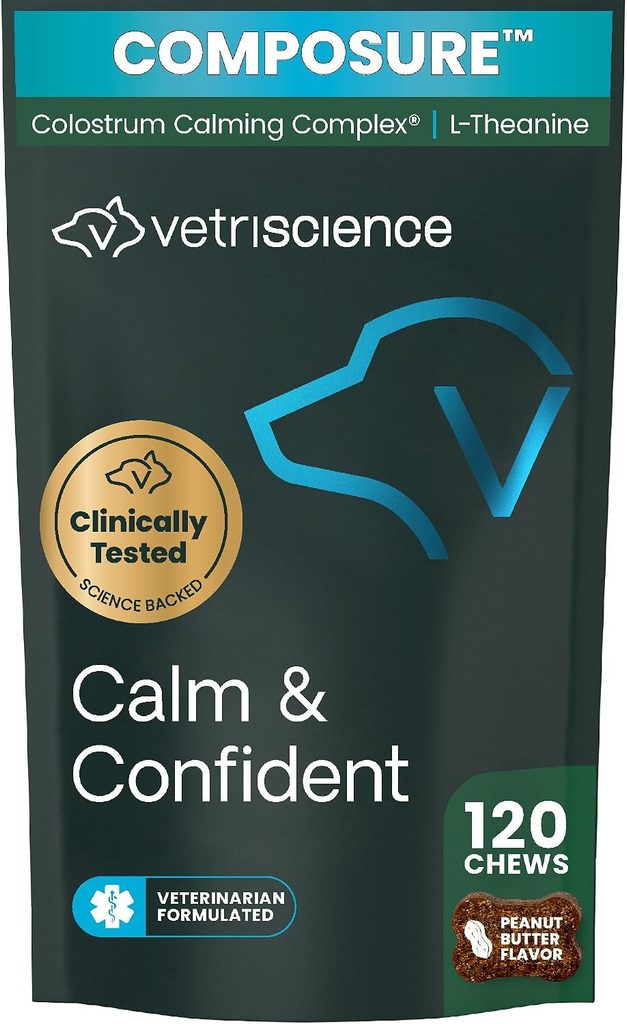
VetriScience Composure Calming Chews
Three active ingredients: L-theanine, a colostrum-derived calming complex, and thiamine (vitamin B1). No herbs, which makes it easier to know exactly what your dog is getting. The maker says it can be given daily or before a stressful event, and that it works within about 30 minutes. It comes in formulas by dog size, so check the weight range.
For storms and fireworks
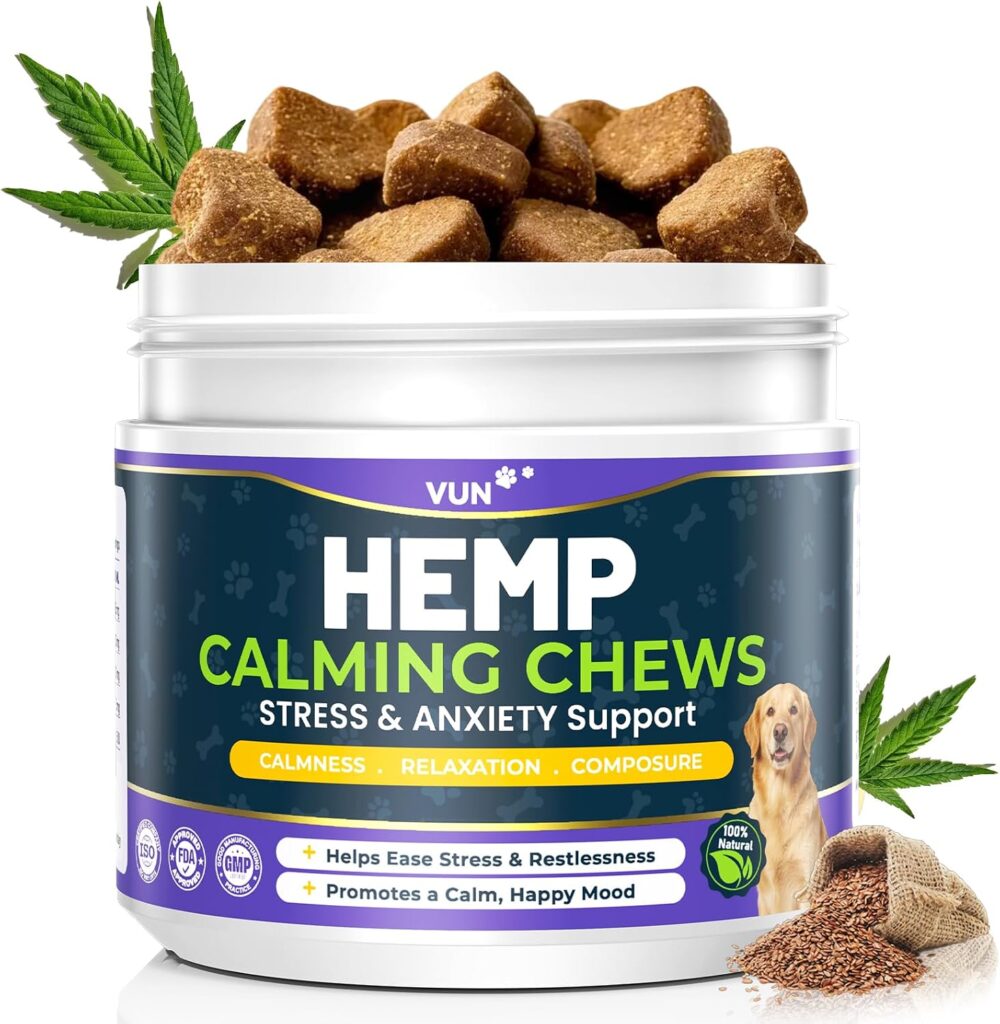
Hemp Calming Chews for Dogs
A hemp-based soft chew for owners who prefer a plant-based formula. Many hemp calming chews pair hemp with calming herbs like chamomile, and some add L-theanine or melatonin, so read the label for what is actually in it. Hemp seed and hemp oil are not the same as CBD, and there is little research showing that hemp alone calms dogs. See our CBD vs melatonin guide if you are comparing options.
Other names you’ll run into
4health Calming Aid is Tractor Supply’s house brand, so you’ll find it there. The soft chew version contains melatonin. Purina Pro Plan Veterinary Supplements Calming Care is a probiotic (Bifidobacterium longum BL999) usually sold through veterinarians. The company’s own study used 24 Labrador Retrievers over 15 weeks, so it’s interesting but small. Both are worth asking your vet about if they come up.
How to Choose and Use Them Safely
- Read the active ingredients and amounts. A “calming blend” with no amounts tells you very little.
- Match the product to the situation. Some are given before a stressful event, others are meant for daily use and take weeks to show an effect. Follow the label.
- Check the weight range and minimum age. Many labels start at 12 weeks and some at 18. For a younger puppy, ask your vet before using any calming aid for a puppy.
- Try one product at a time for a fair trial of a few weeks, and note what changes. Switching constantly makes it impossible to tell what’s working.
- Look for a quality seal. The NASC Quality Seal is one sign a manufacturer follows quality standards.
- Skip human products. Human gummies can contain xylitol, which is toxic to dogs. Always use dog-formulated products.
TREATS ARE NOT CALMING MEDS
People searching for calming meds or over-the-counter anxiety meds for dogs are usually looking at supplements. Actual calming medication for dogs is prescribed by a vet and works differently. Talk to your vet before starting any calming treat if your dog takes medication (especially anxiety drugs or sedatives), is pregnant or nursing, or has an upcoming surgery, since some labels warn against use before anesthesia. For prescription options, see anti-anxiety meds for dogs.
What Else Can You Give an Anxious Dog?
A treat changes how your dog feels for a few hours. What changes the underlying problem is what you do around it. For real canine stress relief, these usually matter more than the chew:
- A predictable routine with regular exercise, meals, and sleep
- A safe space where your dog can retreat, such as a covered crate or quiet bed
- Gentle pressure from a wrap. See our dog anxiety vest guide
- Something to chew or lick. See our picks for anxiety toys for dogs
- Training for the actual problem, like separation anxiety training
HOW TO CALM A DOG DOWN RIGHT NOW
Move to a quiet room, lower the lights and noise, and keep your voice slow and low. Offer a lick mat or chew and let your dog choose whether to come to you. Never punish fear behavior. For situation-specific help, see how to calm a dog during a storm or at night.
If your dog is destructive, panicking, hurting themselves, or not improving after a few weeks, don’t keep switching treats. Talk to your vet or a veterinary behaviorist. Our guide to signs of anxiety in dogs can help you decide how serious it is.
RELATED
Want to compare more than treats? See our roundup of the best dog anxiety products →
Common Questions
What can I give my dog for anxiety?
For mild anxiety, a calming chew or supplement made for dogs, plus a safe space, exercise, and a predictable routine, is a reasonable starting point. For moderate or severe anxiety, talk to your vet, who can discuss prescription options. Never give human anxiety medication or supplements without veterinary guidance.
How long do calming treats take to work?
It depends on the ingredients and how the product is meant to be used. Some are given before a stressful event, while others are daily supplements that may take several weeks to show an effect. Follow the label, and give a product a fair trial of a few weeks before deciding it doesn’t work.
Are calming treats safe for dogs?
Most are well tolerated when used as directed, but they aren’t reviewed by the FDA before sale, so quality varies. Check the ingredients, stick to the label, and ask your vet first if your dog takes medication, is pregnant or nursing, or has a health condition.
Can I give my dog human melatonin gummies?
Not without checking with your vet. Some human gummies contain xylitol, which is toxic to dogs, and dosing differs by size. A dog-formulated product, or a dose your vet recommends, is the safer route.
Are calming treats okay for puppies?
Check the minimum age on the label, since many start at 12 weeks and some at 18. For younger puppies, ask your vet first. Early socialization, a regular routine, and gradual alone-time practice usually do more for a nervous puppy than a supplement.
Think you’re helping — but making it worse?
Some of the most common ways owners respond to dog anxiety actually backfire. Here’s what to avoid.
Disclosure: As an Amazon Associate, Calm Dog Lab earns from qualifying purchases. This means if you click on a product link and make a purchase, we may receive a small commission at no extra cost to you.