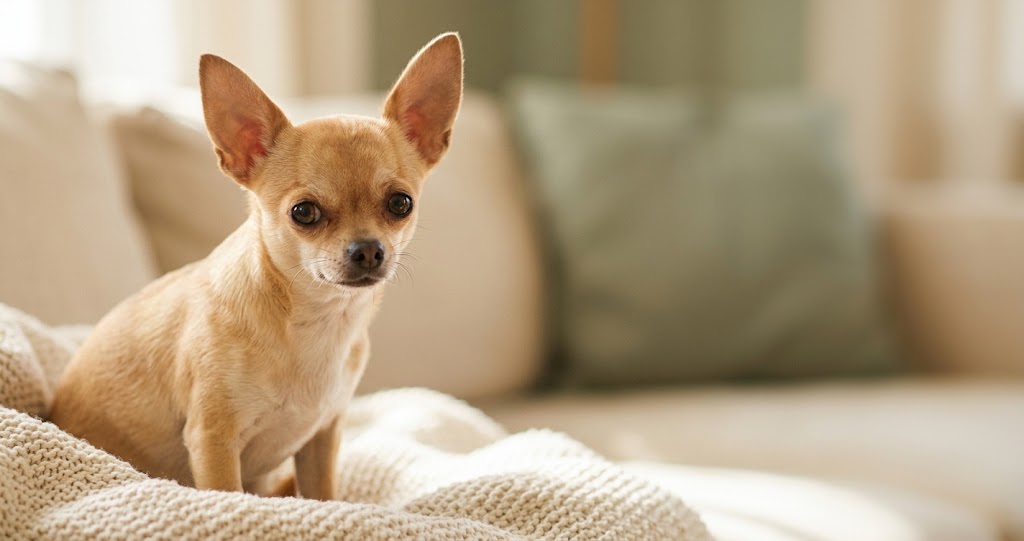
Chihuahua anxiety is one of the most common — and most misread — behavior problems in toy breeds. The trembling, the nonstop barking, the way your dog shadows you from room to room: it gets written off as “just a Chihuahua thing,” when it’s often a dog who doesn’t feel safe.
The good news is that small dogs can change quickly once their world becomes more predictable. This guide covers why Chihuahuas are so prone to anxiety, what to look for, and what actually helps.
IN THIS GUIDE
Why Chihuahuas Get Anxious
Size. A Chihuahua often weighs under six pounds. Footsteps, vacuum cleaners, a running toddler, a bouncy larger dog — everything feels bigger from that height, and a dog that feels physically vulnerable tends to stay on alert.
Bonding. Many Chihuahuas pick one person and orbit them. A dog that’s carried and supervised all day gets very little practice at being calm without you, which is the setup for Chihuahua separation anxiety.
Socialization and temperament. Toy puppies are often kept safe at home, which can leave gaps during the early weeks when dogs learn what’s normal. Add a naturally reactive line and nervousness is easy to understand.
The usual triggers are being alone, loud noises, strangers reaching down, bigger dogs, vet visits, and changes in routine. If visitors are the main problem, see our guide to dog stranger anxiety.
RELATED
Living with another small breed? Anxiety looks a little different from dog to dog. See our French Bulldog anxiety guide →
Signs of Anxiety in a Chihuahua
Some signs are obvious. Others get mistaken for personality. Watch for patterns — especially ones that show up in the same situations.
- Trembling or shaking when nothing seems wrong
- Barking or whining that’s hard to interrupt
- Clinging to you, or panicking when you leave their sight
- Hiding under furniture or burrowing into blankets
- Panting or pacing when it isn’t hot and they haven’t exercised
- Snapping or growling when approached or picked up
- Indoor accidents or chewed doors and bedding when left alone
- Refusing treats in stressful situations
SHAKING ISN’T ALWAYS ANXIETY
Chihuahuas also tremble from cold, excitement, pain, and low blood sugar — a real risk in toy breeds, especially puppies. If the shaking is new, constant, or comes with weakness, wobbling, lethargy, or not eating, call your vet the same day.
For the full list, including the subtle signs, see signs of anxiety in dogs.
How to Help an Anxious Chihuahua
In the moment
Dogs don’t have panic attacks exactly like people do, but a severe fear spike can look similar — trembling, panting, hiding, ignoring you completely. Move to a quiet room, add soft background noise like a fan, keep your voice low and slow, and let your dog choose a safe spot. Comforting a frightened dog doesn’t make the fear worse, so hold them if they want it. If your dog will take a small treat or lick a lick mat, that’s a good sign the worst has passed.
The long-term plan
One-off tricks help in the moment. Lasting change comes from the routine around them.
Pain, dental problems, and other medical issues can all drive anxious behavior. Rule them out before you assume it’s purely behavioral.
Regular meals, walks, play, and sleep make the day easier to anticipate. Chihuahuas do best when they know what comes next.
A covered crate or donut bed in a quiet corner, where only good things happen: treats, chews, naps. Never use it as punishment.
Pick one trigger, like the doorbell. Play it at very low volume while your dog eats something great, and only raise it when they stay relaxed. Expect weeks, not days.
Sniffing, snuffle mats, and puzzle feeders tire a small dog out more than a walk alone. Short training games help too.
PRACTICE ALONE TIME WHILE YOU’RE HOME
Give your dog a lick mat in their safe spot, close a baby gate, and go to another room for two minutes. Many Chihuahuas learn this faster than a full departure. For the complete step-by-step plan, see our guide to separation anxiety training.
Avoid scolding fear behavior, forcing your dog to face the thing they’re scared of, and making every departure or return a big event. And if your dog is snapping, panicking daily, or not improving after a few weeks of consistent work, a certified trainer or veterinary behaviorist can build a plan around your specific dog.
Products That Can Help
Products work best as support on top of the routine above — not as a replacement for it.
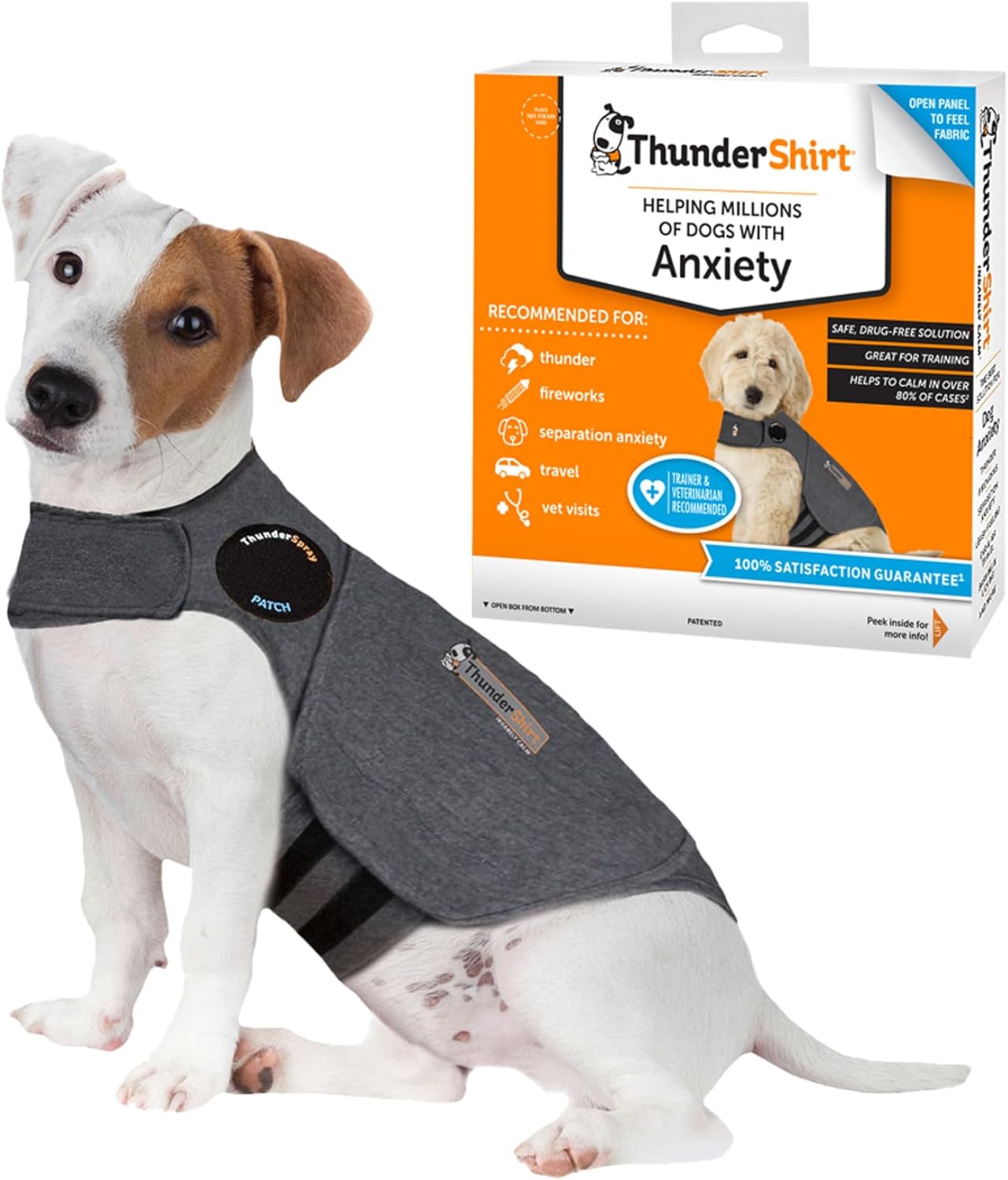
Calming wrap
ThunderShirt for Small Dogs
A snug wrap that applies light, steady pressure, often used for storms and fireworks. Measure your dog’s chest and check the size chart carefully — the smallest sizes matter for a Chihuahua. See how these work in our dog anxiety vest review.
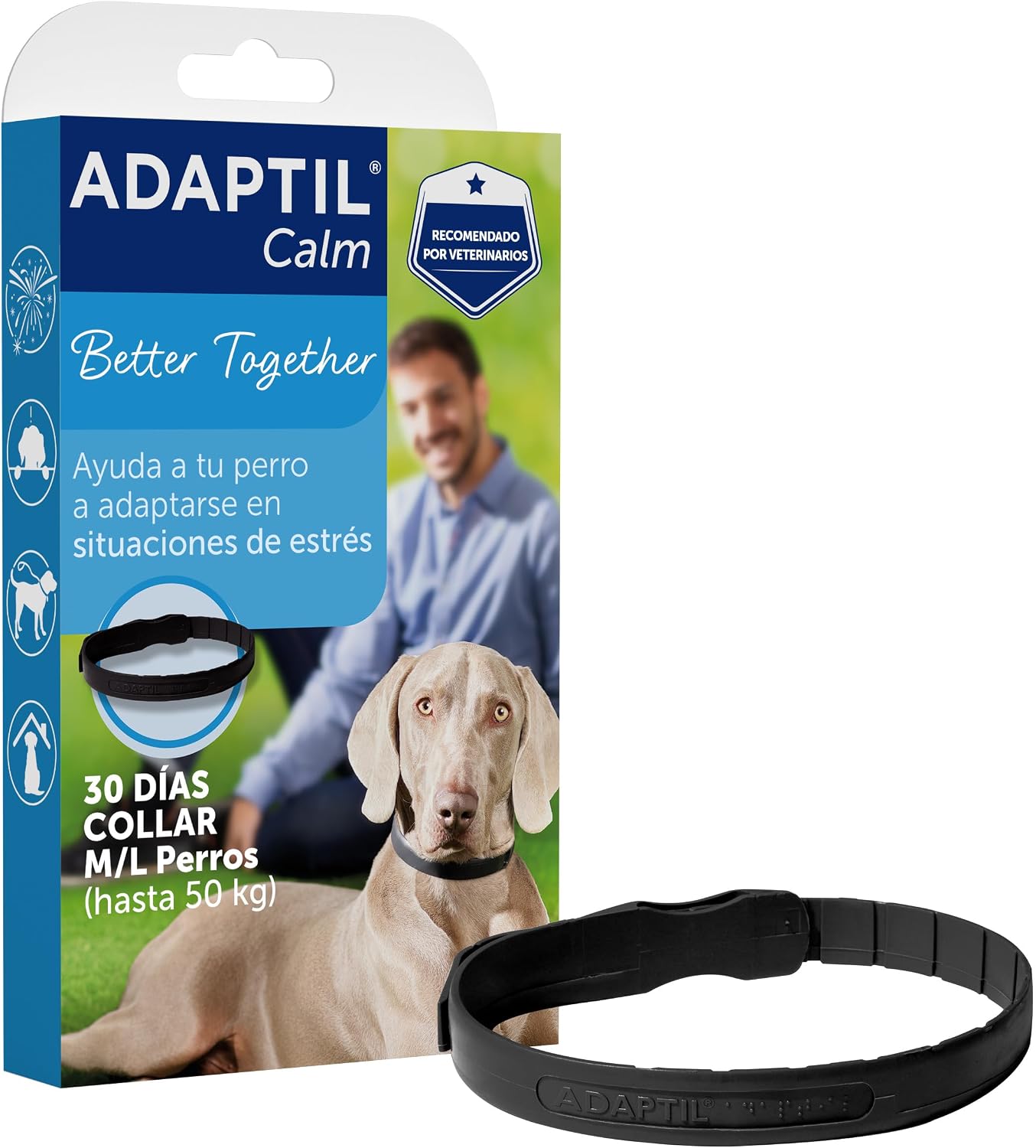
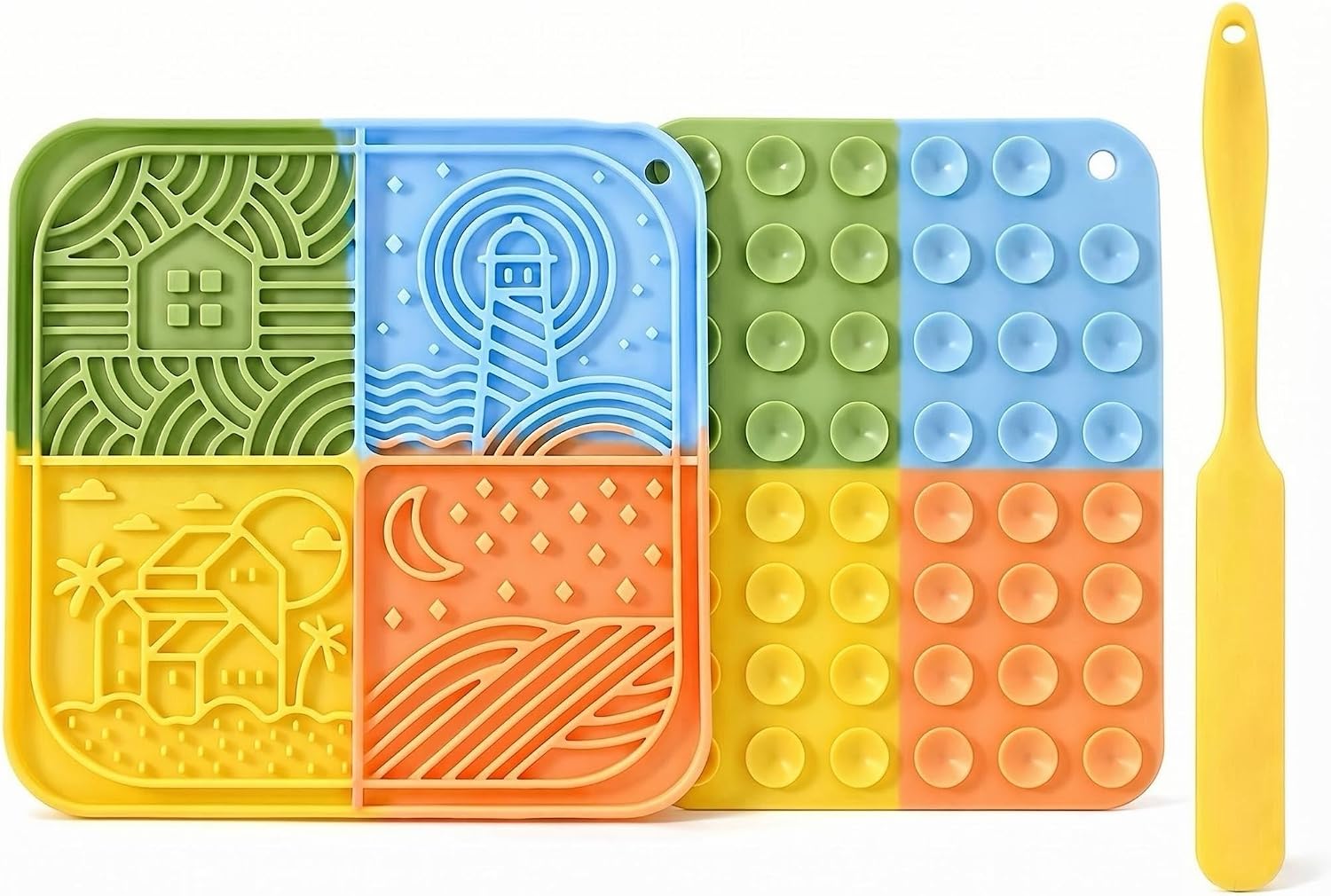
Want more options side by side? Browse our roundup of the best dog anxiety products, or see our picks for anxiety toys for dogs.
When to See Your Vet
Book a visit if the anxiety is new or sudden, your dog stops eating or drinking, the shaking comes with weakness or lethargy, there’s any sign of pain, or things are getting worse despite consistent training.
For severe cases, your vet may discuss medication alongside behavior work. Dosing in toy breeds is very sensitive, so never give human anxiety medication or leftover prescriptions. For an overview of what’s available, see anti-anxiety meds for dogs.
Common Questions
Do Chihuahuas have anxiety?
Yes, many do. Their small size, strong bond with one person, and sometimes limited early socialization make fear, noise sensitivity, and separation distress common. Not every Chihuahua is anxious, but it’s worth watching for.
Are Chihuahuas prone to separation anxiety?
They can be. A dog who follows you everywhere has had less practice being alone, and gradual alone-time training from an early age helps prevent it. Our complete guide to separation anxiety in dogs covers the full picture.
Why is my Chihuahua shaking?
It can be fear, excitement, or cold — but also pain or low blood sugar. If it’s new, constant, or comes with lethargy, weakness, or refusing food, call your vet.
Can a Chihuahua be a service dog for anxiety?
Size alone doesn’t rule it out, but a psychiatric service dog must be individually trained to perform specific tasks and needs a calm, stable temperament. A Chihuahua that is itself anxious is generally not a good fit. An emotional support animal is a different category and doesn’t have public access rights in the US.
Think you’re helping — but making it worse?
Some of the most common ways owners respond to dog anxiety actually backfire. Here’s what to avoid.
Disclosure: As an Amazon Associate, Calm Dog Lab earns from qualifying purchases. This means if you click on a product link and make a purchase, we may receive a small commission at no extra cost to you.